Chapter 4: A choir of Fado echoes through the bairro
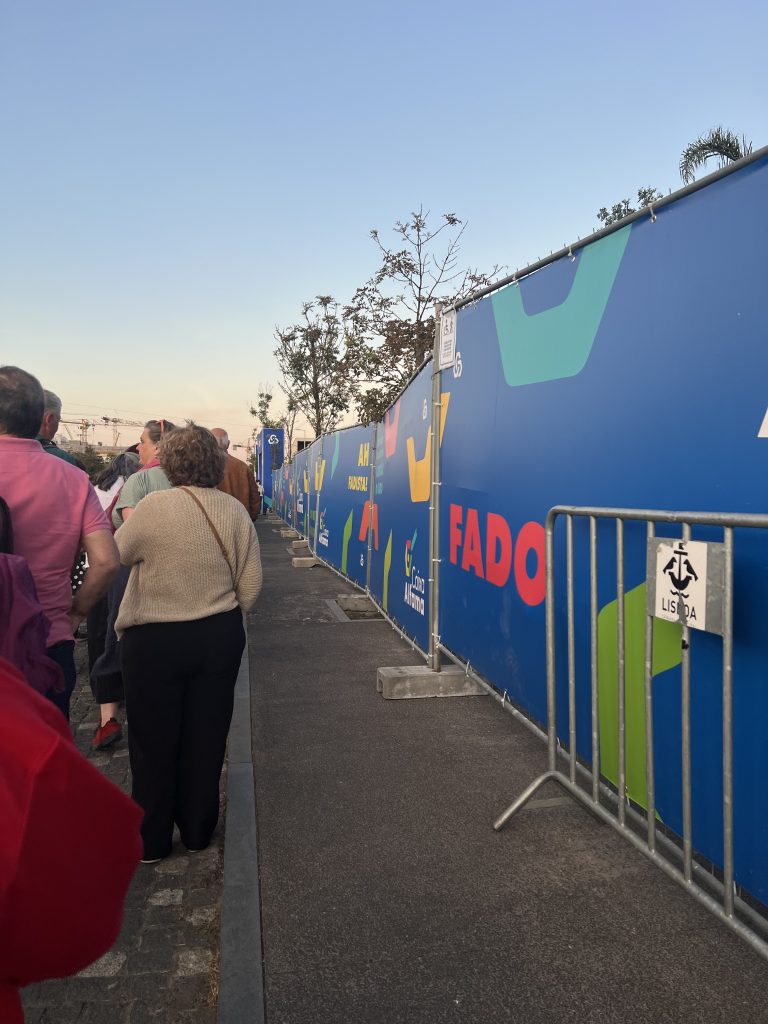
“Silêncio, que se vai cantar o Fado” – the fences around the Palco Caixa give us a hint of what will happen there in the next two days. Fado is about to be sung. The Caixa Alfama festival turns the bairro into an all-day fado paradise. Throughout the whole year, people sing Fado in clubs and restaurants of Alfama. But during this festival weekend, the voices echo even louder through all streets.
“Caixa Alfama is the festival that brings Fado, the intertwining of voices, the strumming of the guitar and the poetry sung on various stages in the streets and alleys of one of Lisboa’s most iconic neighbourhoods.”
Tourism of Lisbon (2024)1
On the 26th and 27th of September singers and musicians performed Fado on 12 stages across Alfama. The schedules were tight, so visitors had to decide which concert they prefer to experience. Before the opening of Palco Caixa, the main field of the Caixa Alfama Fado festival, the cue to the entry was longer than I expected. People wanted to get the best seats for the concert of Pedro & Helder Moutinho.
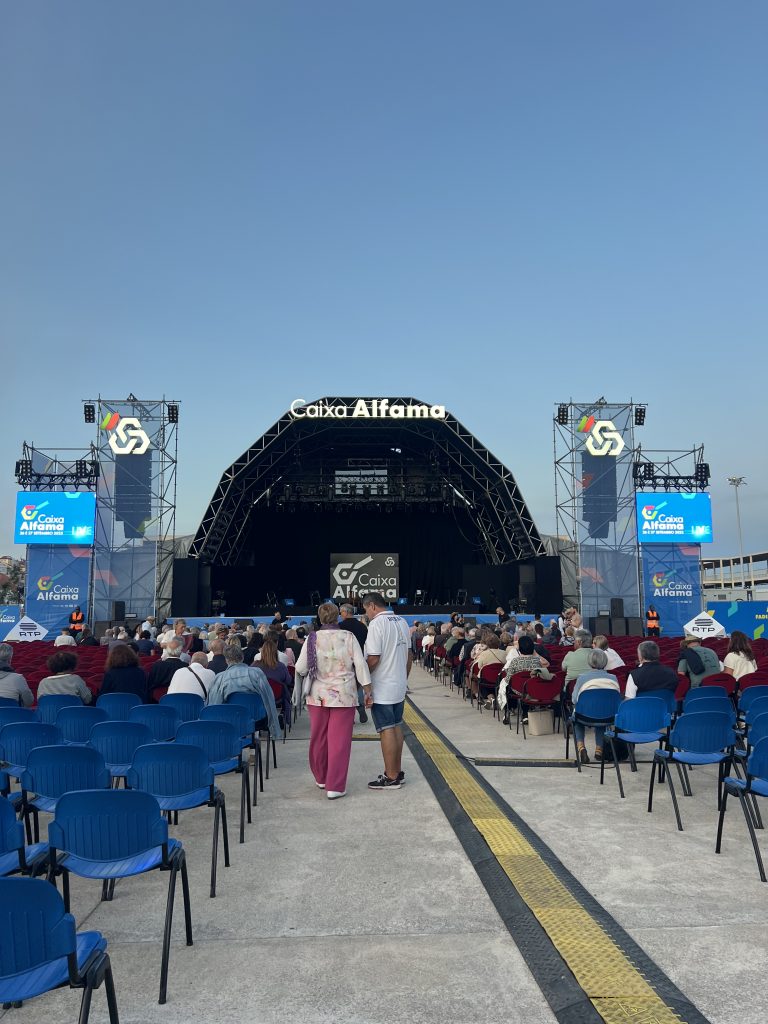
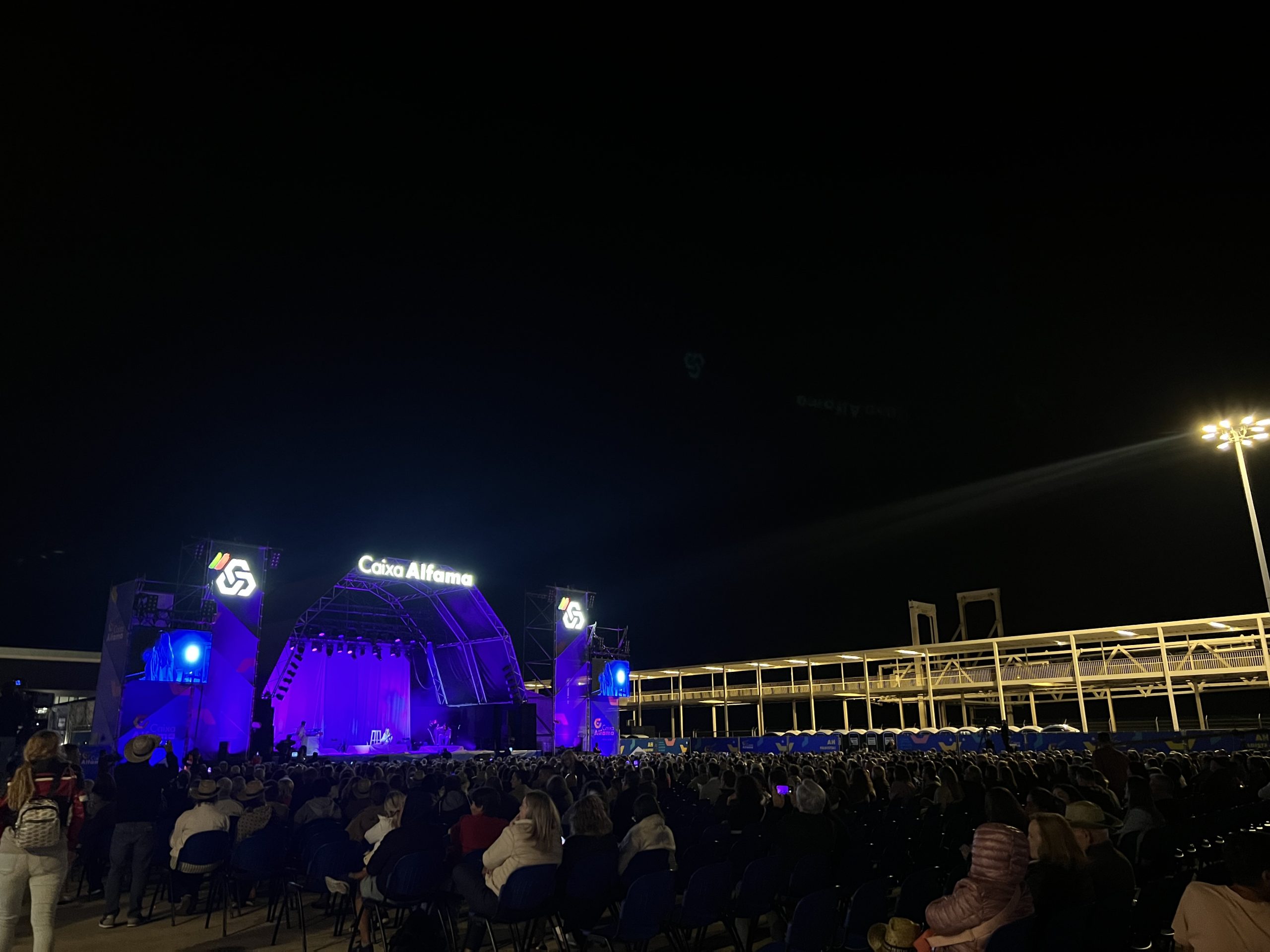
After entering to the festival field, I move towards the first rows and choose an aisle seat on the left. When I sit down, I realize that I am right behind the woman who was before me in the cue – and I take it as a sign to stay there. At 20h the musicians, four male guitar players, come to the stage. The tuning sounds of their guitars give a first hint to the marvelous harmonies we will hear. They start playing a melody, then a voice appears from the back. It’s Pedro Moutinho singing, while walking towards the middle of the stage.
For the second song, Pedro moves a few steps back to sit on a table with a glass of wine and to listen to his brother performing the song Ja não te Espero. The following classic Garota da Mouraria, also sung exclusively by Helder, brings a delightful and quicker rhythm to the stage. Pedro, still sitting, now moves his hands and feet according to the rhythm. Then it’s his turn. With Rua de Esperança he presents his popular own song.
The magical opening of the Caixa Alfama festival 2025
After a few verses, Helder comes to join Pedro for a duet of the Fado classic Igreja de Santo Estevão, originally by Fernando Maurício. Their interpretation of the song is an enchantable duet, sometimes taking turns by stanza and sometimes by verse – culminating in both voices singing together. Helder has a very full and deep voice. Pedro’s voice has another colour that seems to be generally higher, more accentuated. Together they are like complementary colours – both enlighten each other even more when they are together.
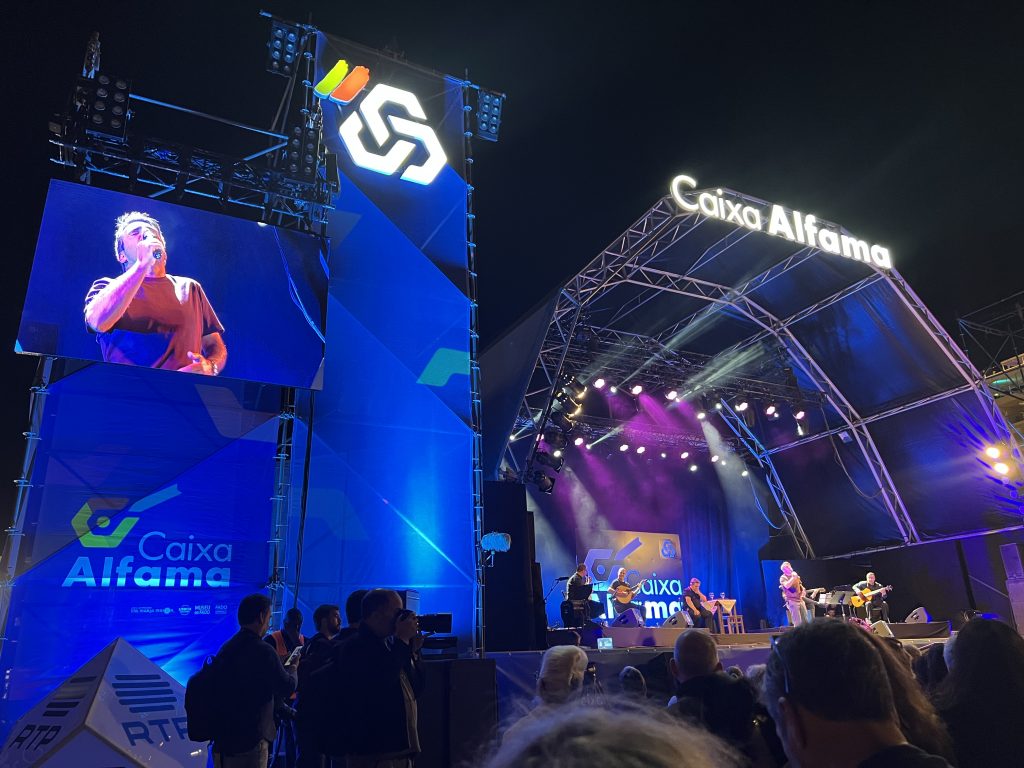
Unfortunately, I cannot see the whole concert. The woman in front of me has already left when I get up from my seat. Maybe, just like me, she wants to see Sara Paixão. The Moutinho brothers don’t make it easy for me to leave. For a few minutes I watch the show standing behind the audience. From there, the concert feels different and – as they determine a big part of my sight, the audience somehow becomes part of the show. With my pretty fast walking pace, it’s only a five-minute walk from the main festival site to my second destination, the Igreja de São Miguel.
The stairs in front of the church are crowded and one of the security members explains to a woman that it’s only possible to enter with a festival wristband – “You need this!”, he says, pointing at mine. Proudly wearing my wristband, I go into the church. The ambient is uniquely impressing. At Palco Caixa, Pedro and Helder had a big stage; in a church like São Miguel the ornaments and architecture are enough to create a festive performance spot for Sara and her musicians. With her beautiful white dress, she shines like a diamond at the front of the altar.
A toast to traditional and emotional Fado
As I arrived after the beginning of the concert, I don’t manage to get a seat. Instead, I stand behind the benches, and together with many other people I form part of a huge circle around the church. Sometimes, there are movements among the audience – people leave or join. Mostly, they are respectful enough to wait until the end of the song. Next to me there is a woman wiping tears from her cheeks. Sara Paixão touches the audience not only with her beautiful voice and appearance, but also with her authentic personality. She describes her motivation to sing on that evening as follows:
“…because I believe music also has this power – the power to make us share what we feel. And I think we’re living in a time when we no longer know very well; I can’t even say what I feel, because it’s a mixture of emotions. I believe we’re all forgetting what’s essential, and that this divine stage reminds us that we are all made the same way – of the same matter.“2
Sara Paixão
She spreads her energy amongst the people in the room, it fills hearts with grace, eyes with tears and forms lips to smiles. When she sings the dramatic Bomba Branca, she almost screams her soul out of her body, making it visible for everyone in the room. The rhythm of Lágrima do Mar is more friendly, spreading the feeling of swaying slowly from side to side. Melancholy slowly drifts away when she announces the last song.
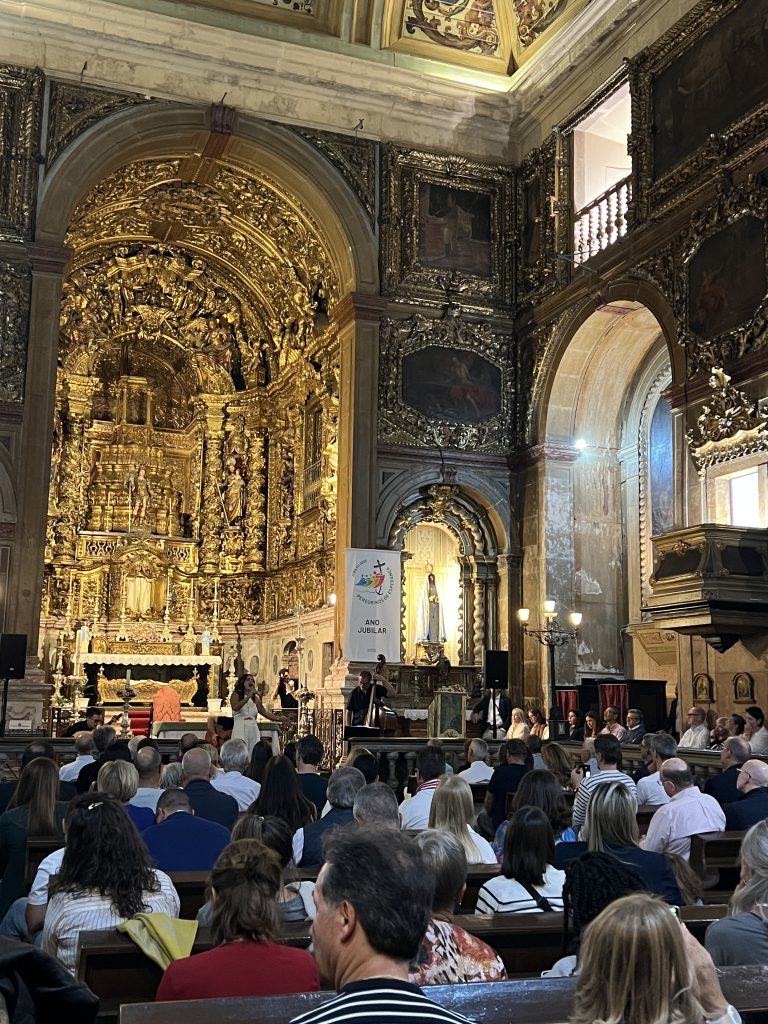
“On the radio, in the car, right in the middle of traffic – when everyone’s tense – if this song starts playing somewhere, we love, the truth is we’re instantly transported and feel so much lighter. This song has a little choreography I’d like you to do with me. It’s very simple – I’ll even put the microphone down.”
Sara Paixão
Tapping her feet she shouts without microphone, tapping her feet, “Bate o pé!”, and then, clapping her hands: “E bate a mão!”. Sara animates the audience to practice this a few times and then make use of it in the following song. The acoustic conditions in the church are amazing and therefore this act, bringing together taps and claps from all corners of the hall, is a dignified end to a magnificent show.
Fado in churches and stages all across Alfama
The next concert is already waiting for me, in the next church, which was the title of the famous fado by Fernando Maurício we heard at the beginning: Igreja de Santo Estevão. When I walk through the steep alleys to get there, I hear the sounds of fado from all corners. Guitars and voices echoe from restaurants on the streets. I arrive at the church just in time for the singer appearing on the altar. Maria Emilia greets everyone, first with an impressing fado, then with some personal words:
“I’m half Portuguese and half Brazilian – more Portuguese than Brazilian when I’m here, and more Brazilian than Portuguese when I’m there.”
Maria Emilia
And there is no song that would fit better to her roots than Saudades do Brasil em Portugal – which she sings now. Originally by David Mourão-Ferreira,the fado starts with the melancholic lyrics “The salt of my tears of love created the sea that lies between us – to unite us, and to separate us…”
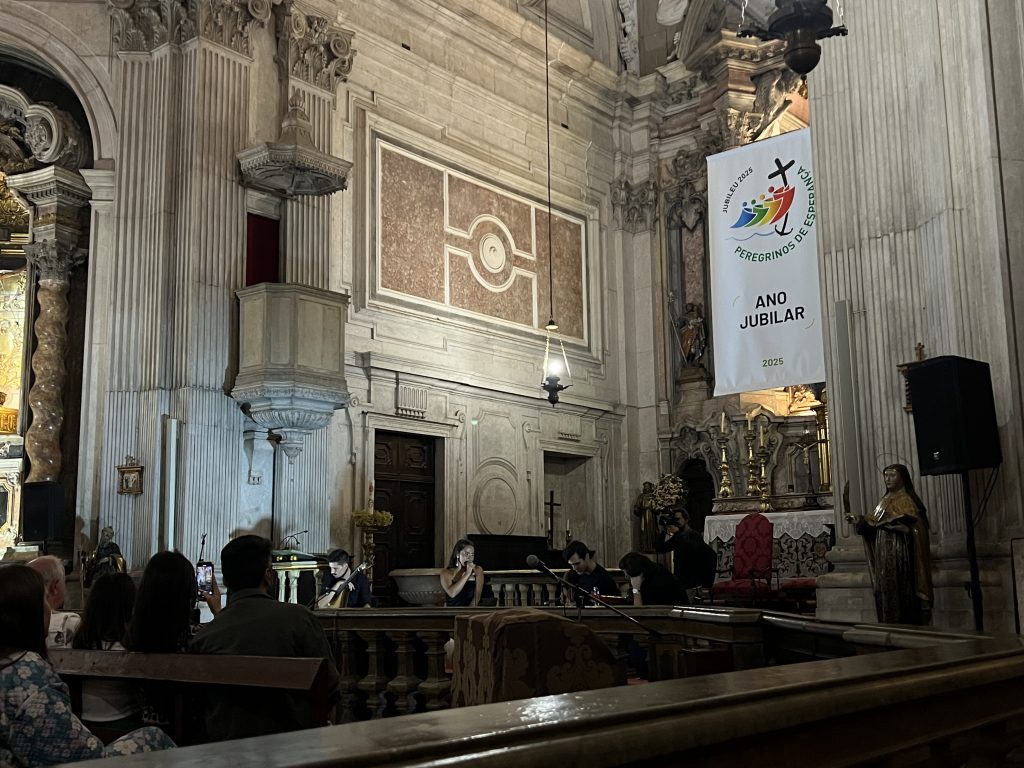
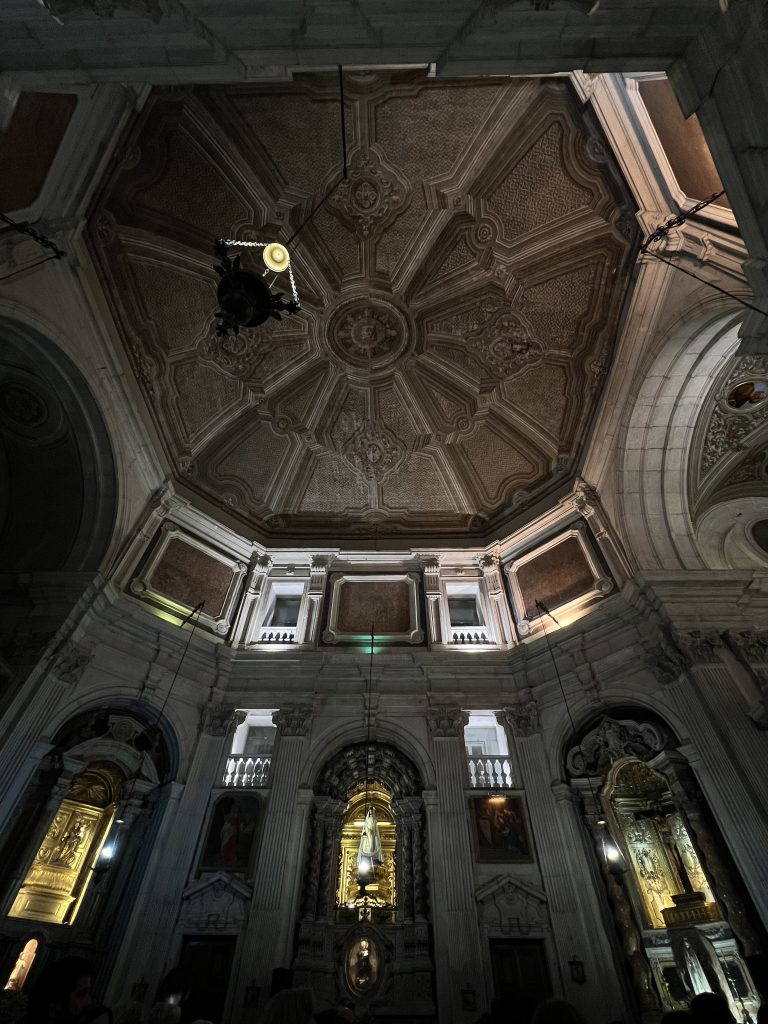
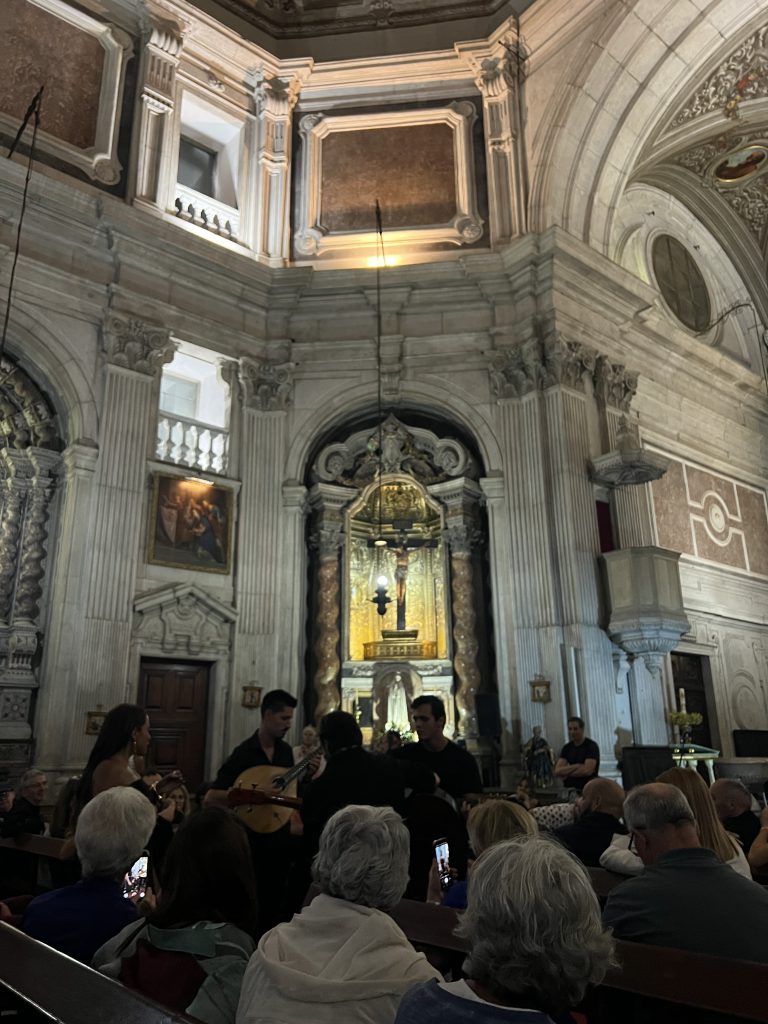
Also, with the following song choice she refers to her origins – it’s the Brazilian song De Volta pro Meu Aconchego by Elba Ramalho, that Maria Emília recorded herself as it is so important to her.
“…between two countries, I had to record this theme, because it makes me think of home and my origins. It brings back so many memories from when I was a small child, listening to my mother sing this song.”
Maria Emilia
From Brazil to Portugal, with love and saudades
The song is about the returning to an Aconchego – a Portuguese word for a familiar, protective place – carrying in her luggage so much saudades – the characteristic fado feeling of missing something that is not there.
“…and forgive my audacity in singing a Brazilian song at a fado festival – but each of us gives what we have to give, and those who give what they can, cannot be asked to give more.”
Maria Emilia
Maria Emília also presents her most famous single Dona do meu nariz– telling the story of an empowered woman who is capable to decide the paths of her life on her own. A highlight of the concert at Igreja de Santo Estevão is when she comes into the middle of the church, leaving her microphone behind. There, the guitarists stand around her in a circle while she is ecstatically singing using body and hands for expressing her emotions.
After the concerts at the two churches, I go back to the main festival place. It got dark and windy. I get myself a glass of wine and sit down to observe the people around me. With an inner smile, I reflect on the past hours, excited about what’s to come on the next day.
After the sun, comes the rain
On Saturday it got stormy in Lisbon. It took me some time to realize that bad weather conditions might influence the festival schedule. I stayed optimistic during the day, but at the same time reduced my objectives for the evening. And so it happened that my second festival day didn’t start as smoothly like the first one. From my first selected venue I was sent to another one, as the concert has been relocated due to weather conditions. Well, no problem I thought, I know the route to Igreja de Santo Estevão already.
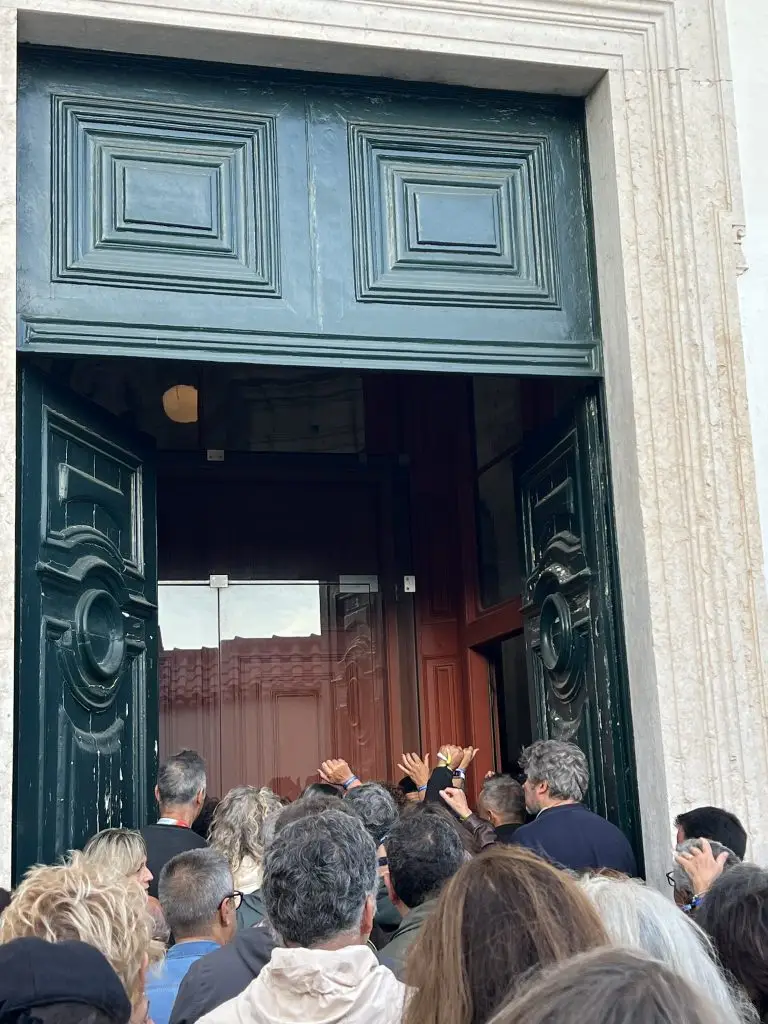
It’s obvious that the church is too small for the audience. The crowd around the entry door makes it almost impossible to see or hear anything from the performance. On her way out, a woman says, “Don’t go in, não vale a pena”. So, I decide to go somewhere else. But where to? My intuition leads me down the road to the Fado museum, which is also part of the 12 festival venues. Not knowing who will play, I get into the cue.
Adding theatre to the Fado performance
All seats of the Fado museum’s auditorium are occupied, when the singer Vânia comes into the front area. She adds spark and lightness to the intimate atmosphere in the room. From the first moment, I can notice her background in acting and theatre. Her gestures as well as her mimics are strongly expressive, when she talks and especially when she sings. A charismatic aura lies in her sparkling eyes. Her voice is strong and so is she.
“I’ve been a nurse, and I currently work in the field of fertility and women’s health. This song is dedicated to all mothers – and to all women who are not yet mothers, but already carry motherhood in their hearts – Mão de mãe”
Vânia Conde
Somehow Vânia’s wonderful concert marked my personal finals of the festival. I knew it got windy and rainy outside, so I didn’t want to leave the museum at all. What I basically did then was moving from one place to the other, in the need for shelter, food and good fado. Unfortunately, it wasn’t easy to find any of it. On the main square at Palco Caixa they started tearing down the stage (without any kind of announcement). So, I went to Igreja de Santo Estevão again. There was a guy from the association Fado à Janela writing fados about concert visitors he talked with before. Another one presented them live for the first time. It made me think that in the end, each of our lives carries a Fado to be written.

Leave a Reply