FULL ARTICLE COMING SOON.
Around the World in Melodies
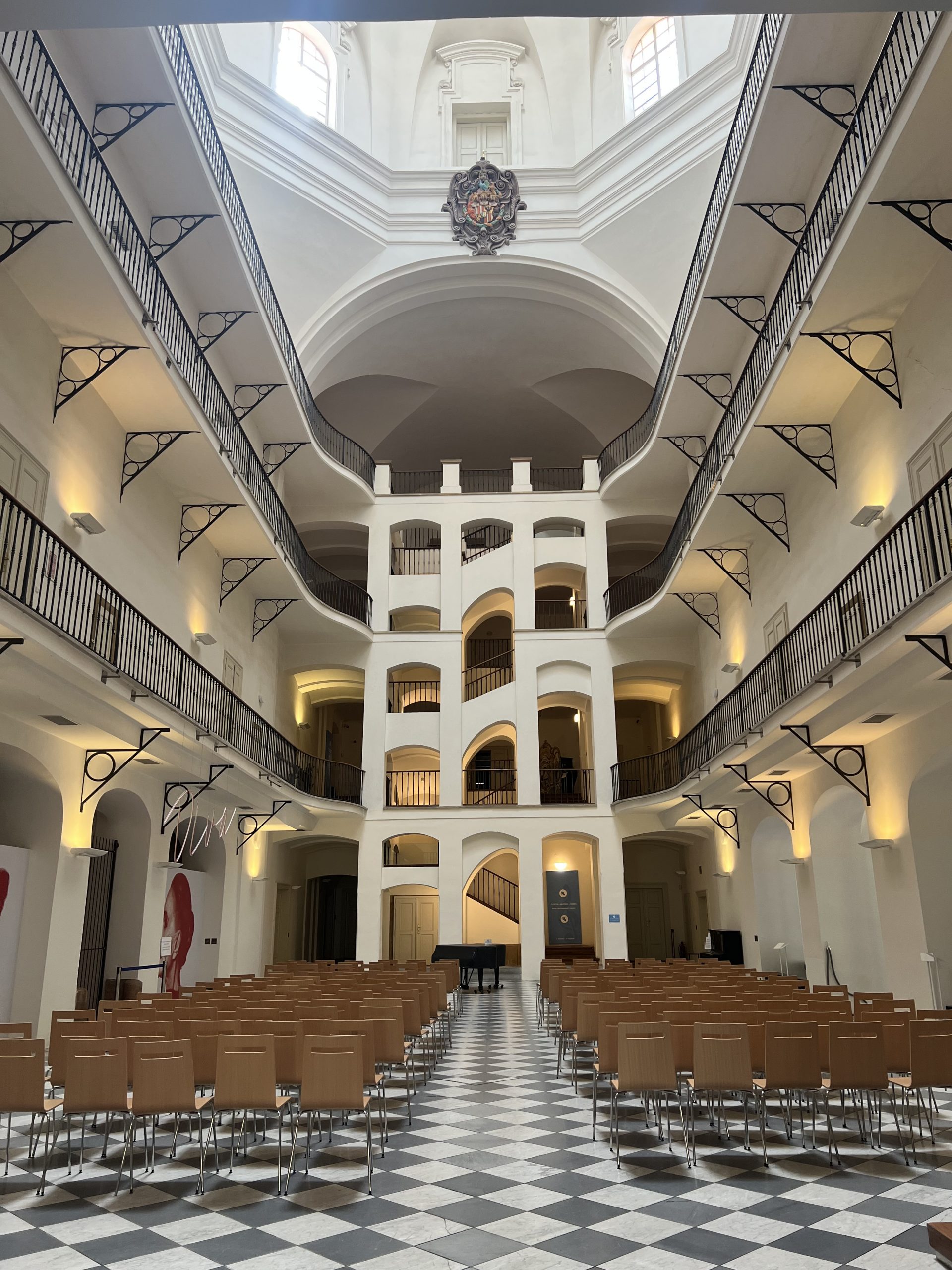
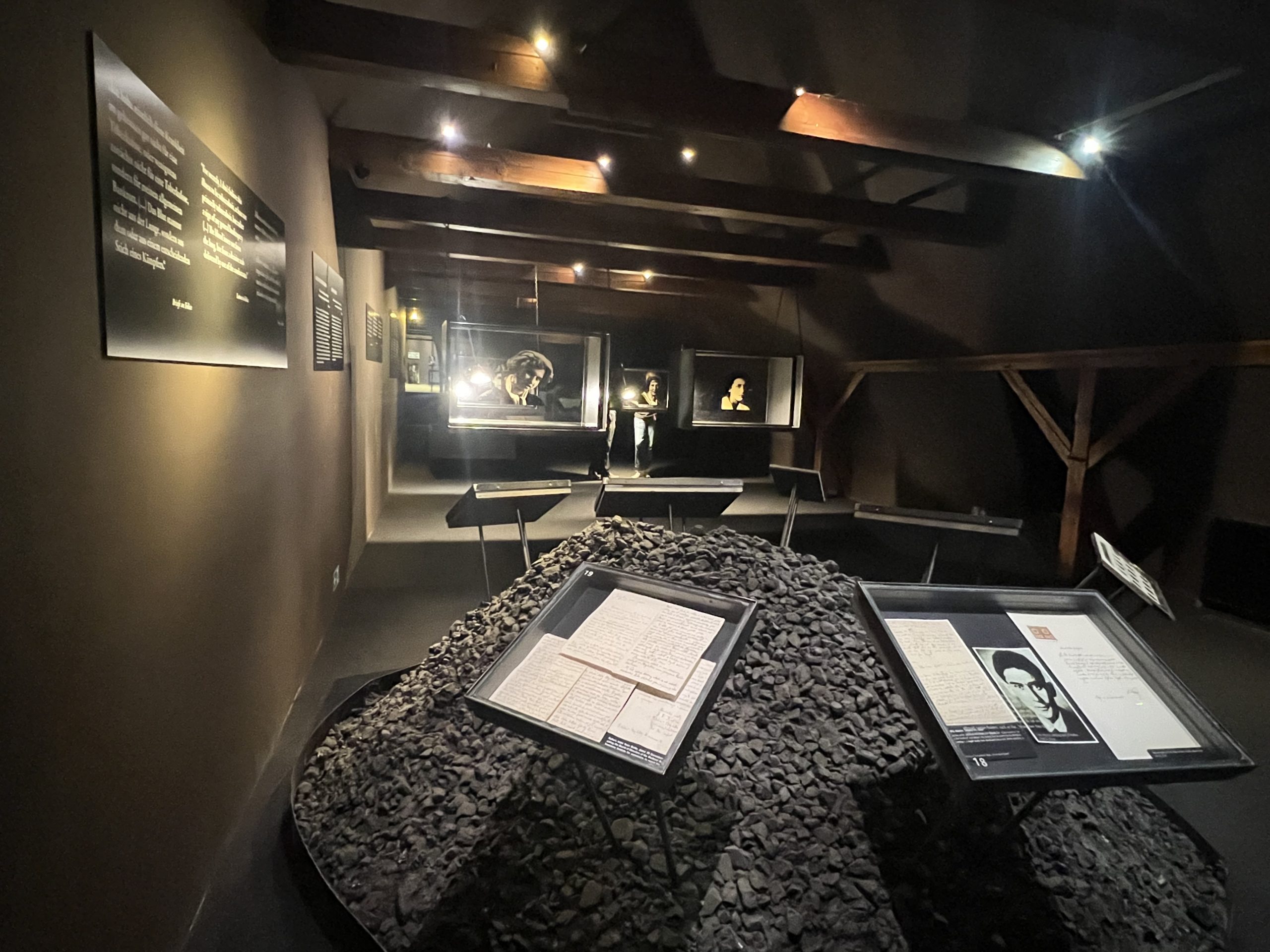
The experience starts on the street: windows full of musical notes and scores mark the way to the entrance of the Czech Museum of Music (CMM), one of the specialized autonomous institutes of the National Museum of Prague. Located in a 17th century Baroque church, the museum benefits from an impressive architecture, both externally and internally. In the vast entry hall, a piano invites visitors to play and occasionally serves as the focal point for small concerts. Classical music echoes throughout the space. Together, these elements make the visit unique from the very moment visitors step inside the building.
Due to renovation works on the dome lantern of the Baroque church, the museum will remain closed until the end of the year. At the beginning of 2027, it will reopen in a new light, with a new temporary exhibition on the ground floor.
Consciously unconscious
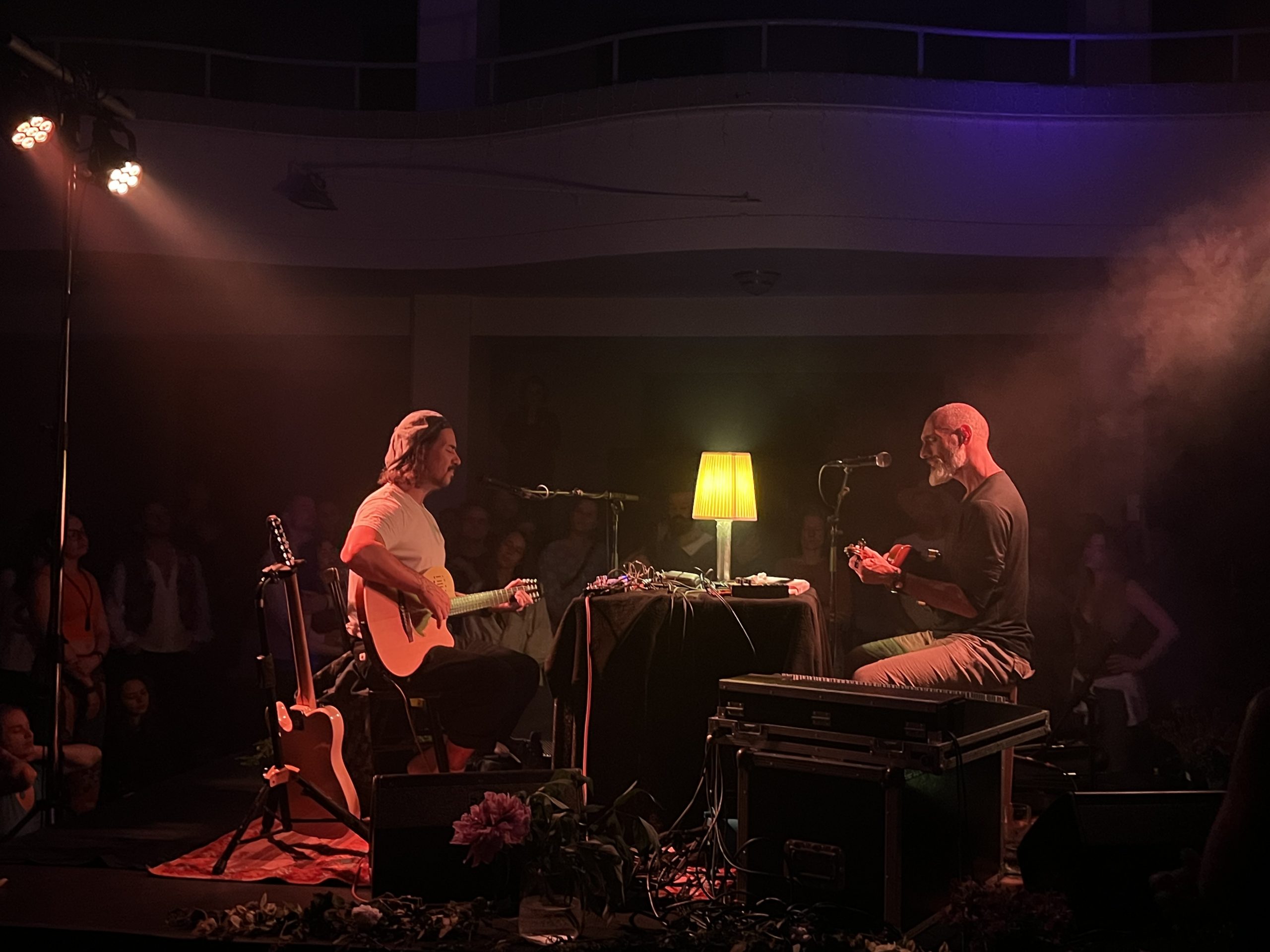
Heart takes flight; The Water Poem; To Become Born. These are songs that may evoke already some sparks in our souls by only hearing their titles. If you let it happen, their sounds will make you dance from inside. AWARE is the music duo behind these poetic, spiritual music themes – going to one of their live shows may even make you dance from outside.
The duo is formed by Matias de Via and Bogdan Djukic, who has a background in classical music and a deep affinity for folkloric music. I visit their concert in Prague, in the Cultural Centre Domovina. The venue is perfect for this occasion, as its high ceilings bring along amazing acoustic conditions.
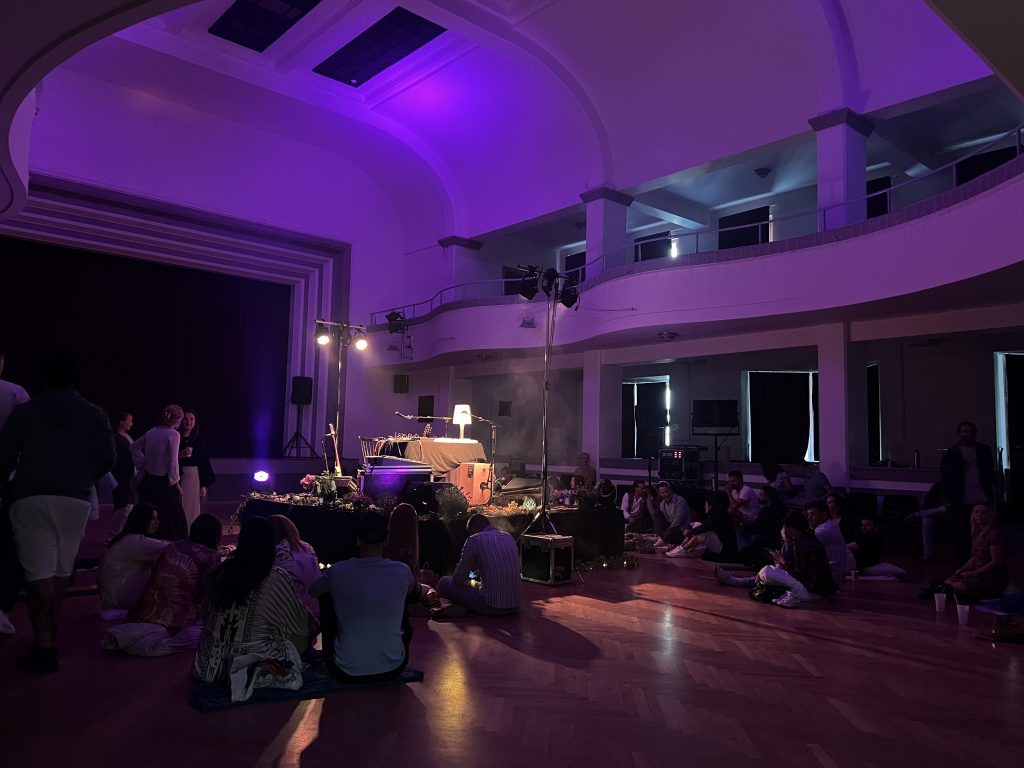
Their band name is an Akronym, the letters stand for Ancient – Wisdom – Aquiliant – Resonnant – Equilibrium. And there are probably no words that describe them better.
AWARE organized the concert in collaboration with Sacred Chants by Luna. I met her for lunch on the day of the concert to talk about her work as a concert organizer.
Exploring Souls (S): In general you focus on spiritual music, right?
Luna (L): Conscious music.
S: Conscious music you call it, okay. And why did you choose this? What do you like about that type of music?
L: I listen to that music so much. I mean, I have a big range of music that I listen to before. I don’t listen to music anymore. It’s not about listening for me anymore. I enjoy the concert, then I don’t need to listen to them again.
S: Then on the concerts, how do you find the artists? Will you contact them? Do you think Aware would be a nice artist?
L: I do it already for 13 years here. So they usually contact me. But also if I really want somebody, like I really feel that this artist is going to do something, then I contact them.
S: And is there a competition in this?
L: No. It’s not profitable, so people don’t want to do it.
S: How many concerts do you think have you organized in total?
L: Facebook is showing me sometimes. How many events, I don’t know, 300 maybe, like a march.
S: Are there some that you really remember?
L: I mean, I remember all of them somehow. I have this access to all of them because everything is different. And mostly there are friends of mine already, we’re like in a more closer relationship because we do it many times or I meet them in different places.
S: Can you name things that make a concert a good concert? When can you say like at the end of the evening this was a good concert?
L: All concerts are good, I think. The sound is important for me very much. And also it’s important who it is. What kind of relationship I have with this music. Because sometimes happens that if somebody like writing me, oh let’s do concert.
S: And do you have sometimes contact with the people, the audience that are coming?
L: Yeah, I know many. Yeah, I know many friends of mine.
S: And I was also wondering when a concert is organized, then sometimes there are mostly there are support acts before. Do you also organize them or could they come in touch with the audience?
L: Well, it’s usually friends also. Friends that I want to support from here most of them
I remember the one at Alex’s concert Eniesa – She was so good.
L: She is from Slovakia. She is very professional musician but not so known. She is more known in Slovakia I like her very much.
S: Will there be someone playing tonight before AWARE?
L: No, no, no, not today. Because they play for like two and a half hours at least. It’s a long concert. It’s a journey.
S: It’s more like a sitting concert, right? Yeah. Like they’re in the middle and…
L: They’re in the middle, yeah.
S: And the setlist, they are making themselves…
L: They don’t have a setlist- they are making this is more like improvisation the whole time. Because what they say is what you hear on the 45 is one thing but when they play you never know where it will take them so they don’t have like okay now and it’s just the whole journey
S: i saw it a bit in the youtube videos there is no like song, song, song, it’s all kind of, you know, with energy.
L: We had dinner with them yesterday, we spent some time. And yeah, we talk and talk and talk, and hear how it’s actually created. It’s amazing how they create. They are both really good musicians.
S: Are there any artists that you would like to organize a concert for here?
L: I am already planning things for next autumn. At least one year for most of them. Especially when it is bigger concerts.
S: So when you organize a concert, is it so very easy to say that you have a deal with this band and then you are the one responsible for location and marketing? Isn’t it a lot of work? Let’s say there is only one concert, how much do you put in?
L: Yes, it’s a lot of work. Sometimes I get nothing from this or even I lose.
S: Really?
L: You don’t know how many people will come. So, yeah. And especially that I’m doing it so long so everybody knows. It’s not like I’m new and I don’t know how to promote. It’s just because the Czech Republic is like this now. It was better before COVID. And until last day I don’t know how it will turn. Like yesterday, two days ago it was half of the tickets sold. So now it’s half more. But still we are not reaching the numbers that we need. Sometimes it happens, it’s the thing, you know. But I think they brought the food now for the band so I have to go.
S: Alright, thank you for the conversation. See you later at the concert!
I arrive early at the concert venue, and I see the hall slowly filling up with people. A lot of them are couples, as I can tell. Some are also just enjoying a show on their own. When I see the stage in the middle of the hall, it makes me think of how much love to the detail Luna has put in it: candles, plants and warm lights frame the two stools and instruments prepared for AWARE.
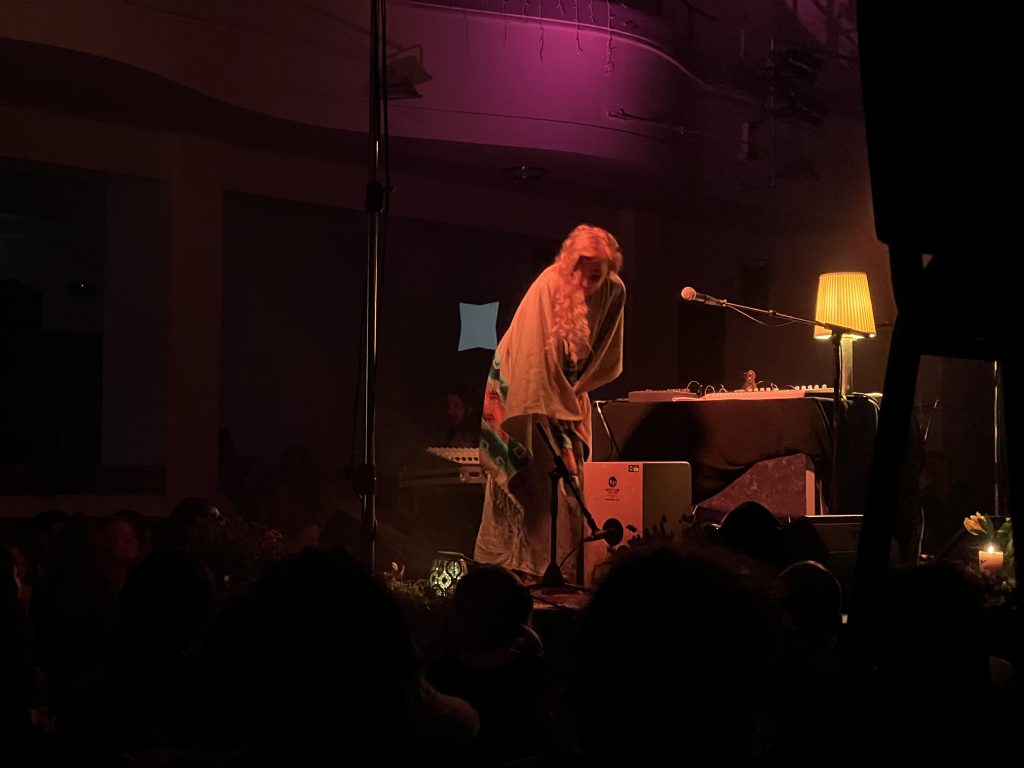
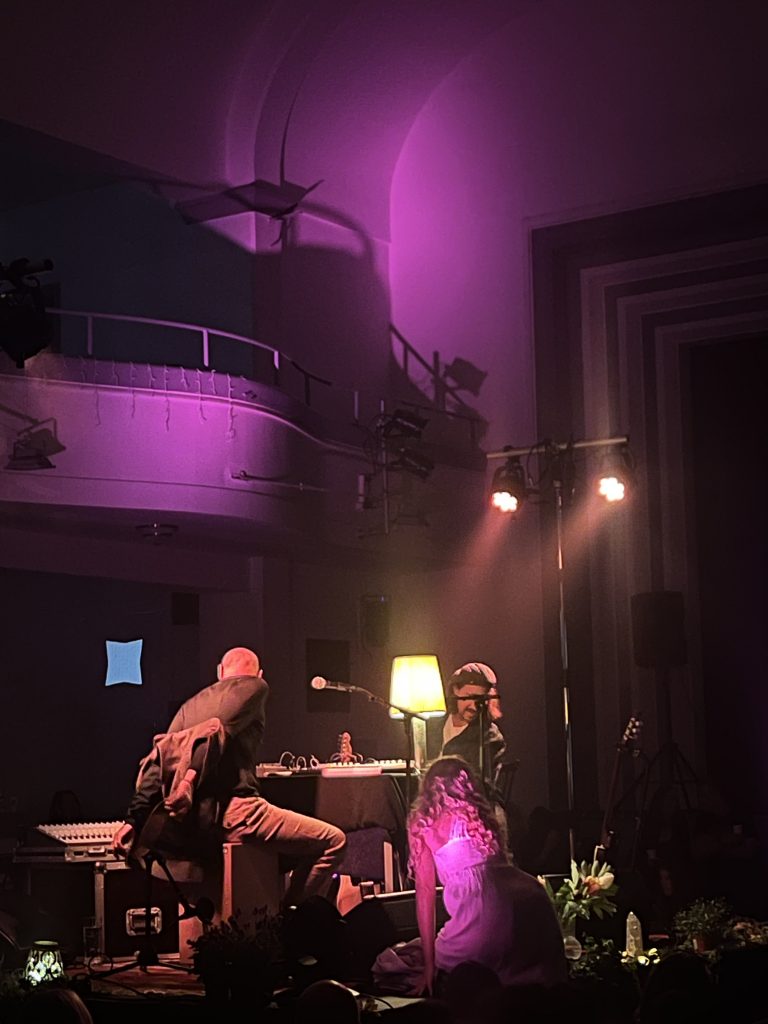
Conscious music echoes through the speakers and prepares the concert visitors for a night of magical sounds. I take a seat on one of the chairs arranged close to the wall from where I can observe and feel the people’s energies around me. Most of them get comfortable on the floor – with blankets, pillows or yoga mats they brought. It’s like everyone’s creating their own little living room, and within the hall, they all melt together to one. I see Luna walking around the venue, completing the details of the event with love.
The musicians come from the front to the middle of the hall. As they take seat, the image of the stage seems complete. Bogdan holds a violine in his arms, he holds it like a guitar. When he plays the first strings, I can see the energy of the sounds flow through his body. He circles the head with him, moves his legs and stretches the neck. He can barely keep himself seated.
Some claps appear among the still seated audience. Some people get up and slowly start dancing. The more people get up, the more seated people get animated to unite themselves with the dancers. As Bogdan rises his hands with the rise of the sounds, almost everyone in the room is standing. Everyone is moving. A man in front of me lies on the ground and moves his shoulders in the beats of the magic music created by AWARE.
Bogdan shouts ecstatically – “HEJ!!” – loud claps.
Matias takes on the word and thanks everyone for being there on their very first concert show in Prague. “Are you good at singing?”, he asks into the room. Everyone’s going crazy – it seems to be the common way of proofing how good they can sing. Then, they slowly find back to silence. Matias teaches them to sing Lalala – “do it again” – Lalala.
Meanwhile, a couple dances on the front stage. While I watch them, I get slowly carried into their world. Up there, they are celebrating their love for each other. Their moves are energetic and fit perfectly to the rhythms created by AWARE.
The beat gets louder and faster.
Some sounds later, Matias announces the next song they would play. Normally, he says, they don’t play their recorded songs on live shows. They prefer to fully improvise and thereby dive into the beats. When they play the first chords of the song, which is one of the first they recorded together, they have all my attention and amazement. “Heart takes flight” lets my heart fly away.
‘Dub is the Way’ Tour
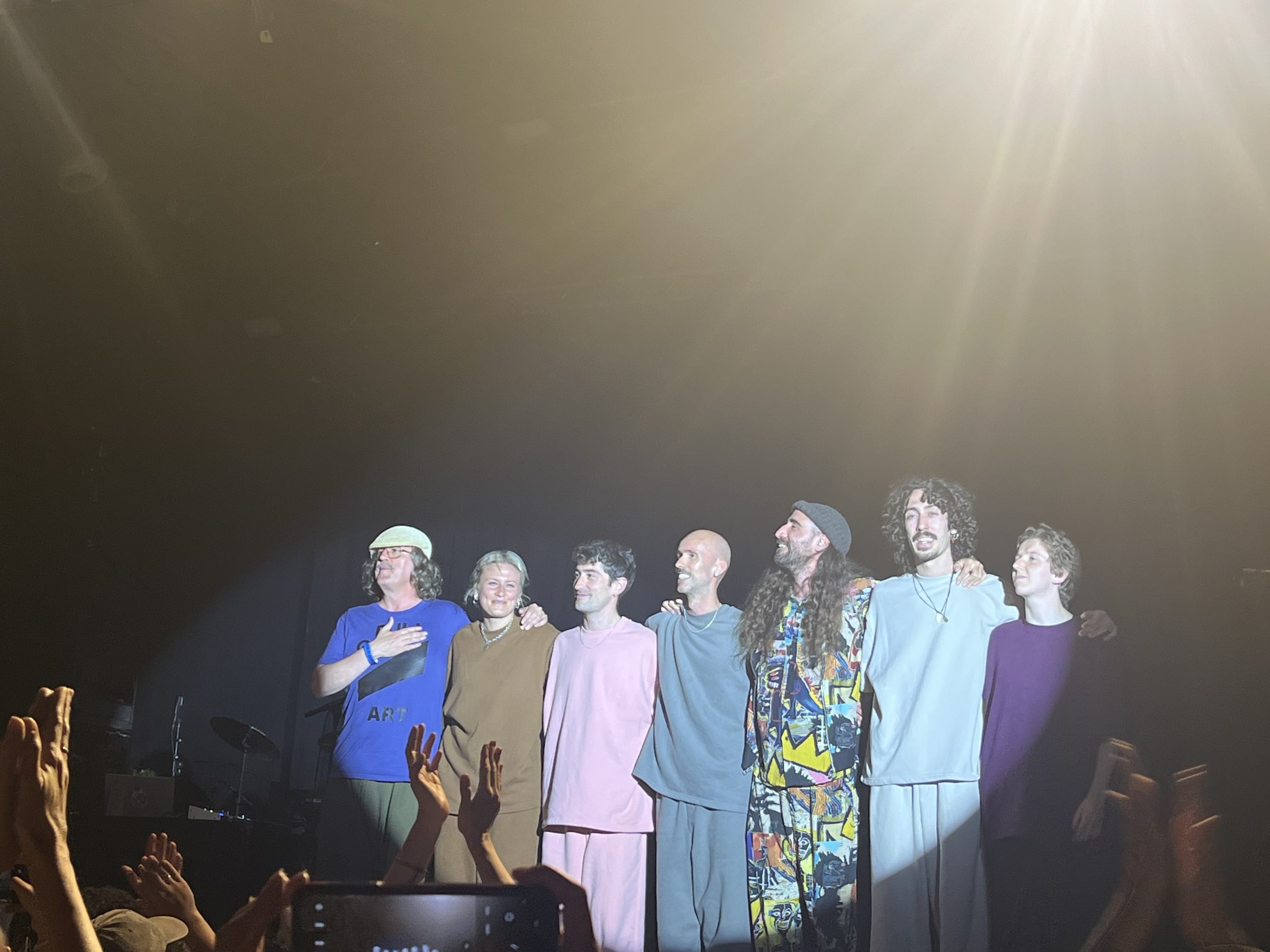
If it might feel different to experience Alex live for the second time after the show in Prague, I wondered. To experience him playing in his hometown Barcelona, speaking Spanish. Yes, it felt different. The crowd at Sala Razzmatazz was so powerful – it made the artists on stage carry out all the magic and creative energy they had saved before.
The stage is decorated with roses – it’s the Sant Jordi week in Barcelona. Love is in the air. Love is everywhere. May you ever forget that, you should go on a concert by Alex Serra. He will remind you with the beats of his songs and their lyrics and with the wise words and anecdotes in between the performances of the beauty and the loveliness of life.
The concert in Barcelona is part of the tour Alex Serra & The Space Crew. The crew contains dancers who dive deeply into the sounds of the music and express their interpretation of it on a physical and emotional level.
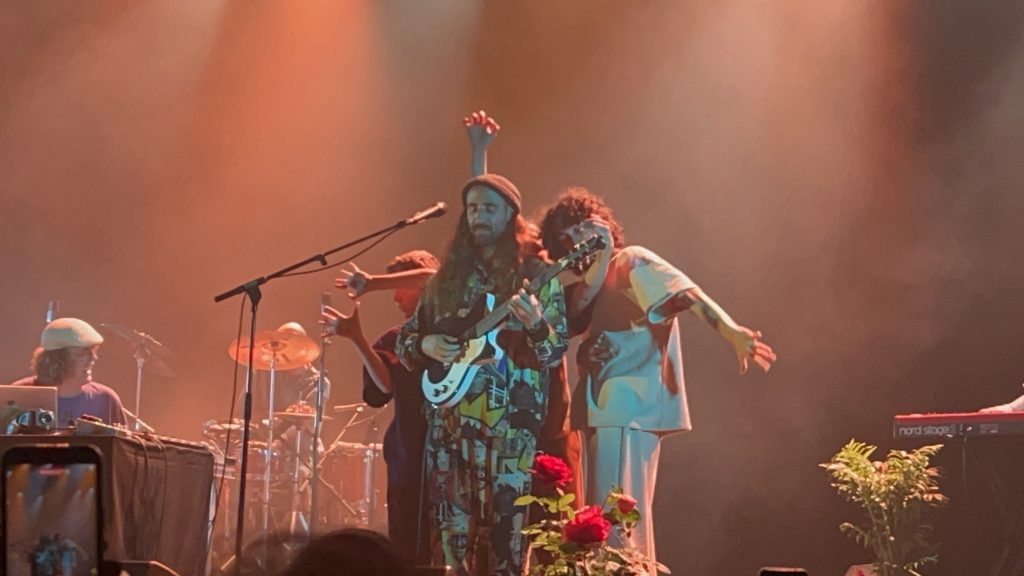
When looking at the stage with Alex Serra singing, Totidub at his DJ table and the dancers Pau Arnal, Kenya Sauer & Irene Baeza, I realize how each of my favourite moments got bet by the next one. The Space Crew dancers express themselves by melting within the beats the musicians around them produce – it’s like there’s a whole new world opening up to me as a spectator.
For the period of the concert, I dive into something. Into a something, that Alex calls a dream. Right after the first song he describes how tonight the sum of all our single dreams are creating together one big dream.
Moreover, other than a dream, this concert might count as a theatre. A contemporary dance performance. A spiritual awakening. The way a song is presented is curated in such a special way, which makes every moment of the evening worth to be remembered.
The dancers carry us visually, Alex carries us mentally from song to song. In between, he shares with the audience some of his wise anecdotes and learnings about life.
“Como hay una red no. Vosotros sentís esto? Que hay una red. mas allá de lo visible. que nos une a todos- se siente no? y a veces me pregunto, como se hace para poder mandar amor a esas lugares de la red que están como – podríamos decir enfermos. Si somos una red será que estamos unidos literalmente con todos todos todos. entonces si queremos como sacar a alguien de la red porque no nos cae bien es imposible sacar alguien. Todos somos una red y hay que mandar amor a todas las rincones de esa red-“
“It’s like there is a web, isn’t it? Do you guys feel that? That there is a web. Beyond the visible. Which unites everyone. You can feel that, right? And sometimes I wonder, how to send love to the parts of the web that are – let’s say – unhealthy. If we are a web then we are literally united with everyone everyone everyone. So, if we want to remove someone from the web because we don’t get along well or whatever – that’s not possible. We are all a web and we should send love to every corner of the web.”
What a wise man he is, I think to myself while listening to his soft and thoughtful voice.
Every now and then, I look around me, where I can see people hugging each other. I am here on my own. So I hug myself. And my heart feels hugged by all the love around me.
There is this great feeling of fulfillment spreading throughout all my body, when I listen to Alex’ voice and the sounds created by his friend and DJ Totidub. Flashbacks of my first concert experience with Alex Serra in Prague enter my mind. The biggest change the concert in Barcelona brings along are the three expressive dancers who interact with each other, with the audience and with the musicians. Somehow, they create a bridge: by interpreting the music in the first place, they show us how deep, meaningful and diverse musical harmonies can be.
“By the way, this is not a concert”
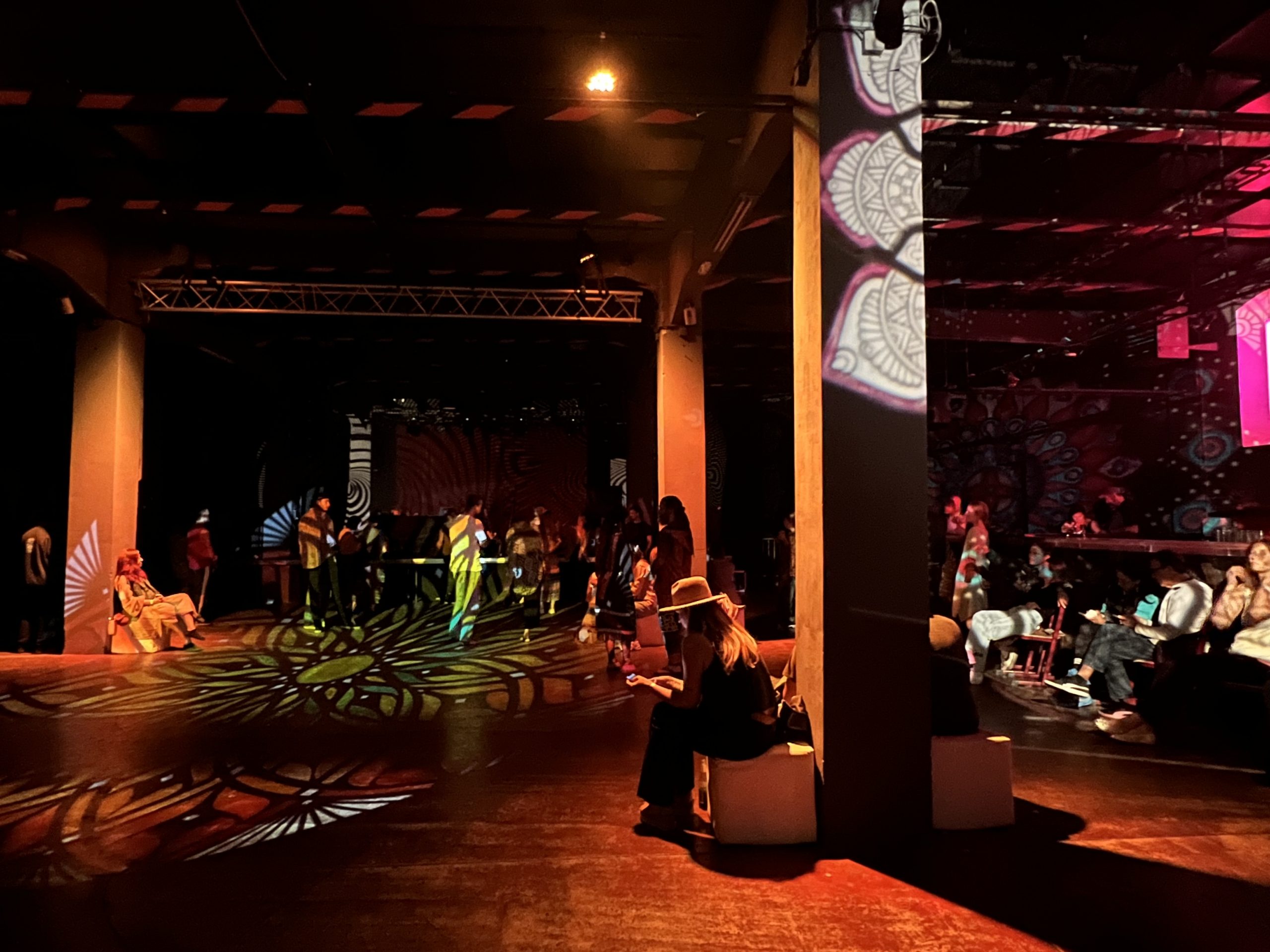
The moment I entered the concert hall, I felt how my heart was being filled with lightness. The walls were full of colourful lights shaped as flowers, of flowers shaped as lights. Walking through the middle of the room felt like my soul was being caressed for a moment.
Usually, when you go to a concert, you have some kind of expectation about it. You may be a great fan of the artist; have those one or two favourite songs you are especially excited about hearing live. However, some experiences are impossible to anticipate. You cannot imagine before what will happen but only reimagine after you have lived through them. And so it was with the concert by Alex Serra in the MeetFactory in Prague on the 5th of September 2025. It was the first time that the Barcelona-born artist played in the capital of Czech Republic. It was the first time for me to see him live. Listening to this music live has thrown me back to all the moments I listened to the songs. And probably, I have never been more present in a moment than when I was standing in the audience, right in front of Alex Serra performing his songs, that carry us into another world, into a world that is more real.
I find my way towards the stage. Throughout the room there are some groups – or rather pairs – of people. There is still a lot of space to be filled. I enjoy this tranquil and at the same time loving energy that surrounds me. Looking around, I see most of the people are couples, some women seem to be on their own, just like this young girl leaning on the wall at the left side of the room. I want to be in the middle of the room, so I can feel the wholeness around me, I think to myself. I realize that, for concert conditions, it’s still pretty quiet in the room. It’s probably because there are not any remixes being played through the speakers. What we can hear is a soundtrack out of the forest, of birds and crickets chirping, of nature naturing.
A woman walks to the middle of the stage. She builds up her microphone, putting her guitar around the neck – tonight’s support act. (Later I found out that she is a Slovakian singer, Eniesa). Just like a magnet, with her presence she pulls the audience closer to the stage. More and more people are entering the main concert hall. She starts speaking in a language that I don’t understand. I immediately feel attracted to her way of being. Her smile carries authenticity, her eyes brightness. She starts playing. In her voice I can hear that her heart is full of grace, in the whispers of her guitar I hear joy and lightness. Slowly, very slowly, bodies start moving. Maybe it’s the blood flowing faster than usual. I, too, cannot resist to gently wave my body through the air. The colour of the headlights is changing. From purple to turquoise, back to purple, then blue and red. As I look into the crowd, I get emotional, feeling enormously thankful for the universe allowing us to open up spaces like these. About two meters right from me, there is a woman dancing barefoot, her eyes closed, a smile on her face. On my left I can see the image of a family that carries more love than I could ever have imagined seeing with my eyes: father, mother and daughter are putting their arms around each other’s necks while they lean their backs towards one and another. As I see that many let themselves fall into the moment while having their eyes closed, I close mine as well. I open them. I close them. As I can’t stop to move to the music, I get dizzy when they are shut. Therefore, I prefer to watch people and to see how beautiful the artist looks on stage.
I am already so emotionally attached. And this was only the preact. While she is building her equipment back (the microphone and the guitar), I notice there is a candle right in front of the mic stand. Its flame connects all our gazes.
When Alex Serra, tonight’s headline act, comes on the stage, a veil of harmony is being thrown into the room. Tranquil forest sounds accompany him on his slow walk to the microphone in the middle of the stage. On his right, his guitar, and a huge DJ desk, where his friend Totidub will be doing his magic.
“Hello”, Alex says with his voice color of rainbow, “how are you doing?”
From the first moment on, he casts a spell on us.
“And by the way, this is not a concert.”, he notes with a relaxed mind, “This is a transformational ritual. Together we will go on a journey. Each of us makes an intention now. And with that intention we imagine entering into a spaceship and travel through universe.”
Alex starts playing enchanting sounds on the guitar. Then he puts it down and picks up a sound bowl. Their playings slowly end up in the melody of the song SO FREE. It seems like they are improvising, but the result is too good to be improvised. Guitar sounds, handpans and nature chirps are flirting with each other.
I feel tears dropping from my face onto my breast. There is so much gratitude, nostalgia, happiness, and sadness lying in them. It’s especially Alex’ words before he plays the song SANA CORAZÓN (“Healthy Heart”) making me so emotional. He describes how sometimes, we tend to make ourselves tiny, we talk to ourselves as if we were not good enough. He observes this also about himself, but also about friends and family around him. With the song he shows himself that all of this is just a dream, and that through real selflove we can heal our hearts and live healthy. During the song, I hold my hands on my heart, keeping it safe and warm. The song culminates in the wise words of a female voice:
“Yo me amo. Yo me libero. Yo me perdono. Yo merezco ser feliz.“
= I love myself. I liberate myself. I forgive myself. I deserve to be happy.
The song TRANCE LIFE, which is also the name of his latest album – brings us further on our immersive journey through the universe. It takes us on a trip towards the sun. In some parts of the song he stops singing and focusses on his guitar sounds, and thus creating harmonies with Totidub’s beats. “And it don’t matter how far, you’re always coming back to the same star. And it don’t matter how far, you’re always coming back to your heart. Mmmmmh, mmmmh” – this is usually the end of that song. However, at this concert, at this transformational ritual, we all created and infinite echo of mmmh. Like an interplay of question and answer, we sing that all together, losing ourselves in a collective meditation of mmmh.
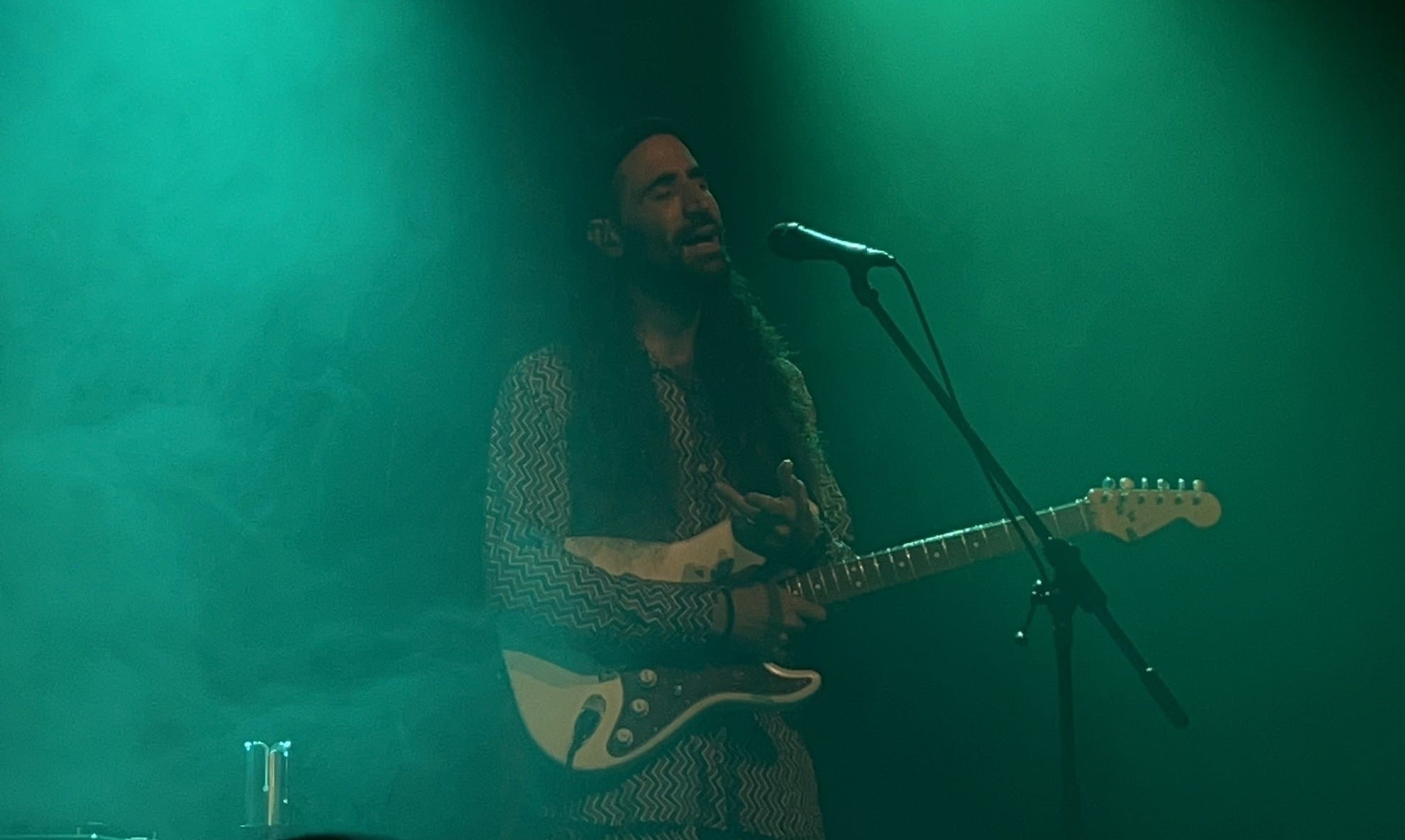
Before he plays the next song Alex tells us a story, it’s a good night story that he invented for his one year old child. One day the sun woke up, but it was dark outside. And the sun was trying to make itself shine but it didn’t work. Years went of darkness went by, the sun was getting depressed. One day the sun looked on the sky full of stars and the moon was shining, admired by the sun. The moon turned to the sun and asked if everything’s okay. And the sun shared that it forgot how to shine. The moon laughs and says “are you silly? You know that this light of mine is a reflection of your light, right? So it’s impossible that you stop shining” from that moment the sun decided to sit on his throne in the sky and shine forever. This sparkling story was the foundation for the song LUNA. Totidub starts playing, Alex starts singing.
Alex reminds us that we are still on this transformative journey. “I want you to feel, very deeply, what you feel right now, and send it to the bottom of who you are.”
What I felt in that moment was a bright ray of love enlightening my soul and body. With that energy I followed along the song OUTTER SPACE and the incredibly impressing interplay of sounds the two musicians were creating together. It was not only their music but especially their positive charisma, their smiles and their eyes that filled the room with loving energy. “We love to do that. To just start to play and see what happens.”, Alex says, filled with joy from the last minutes of amazing music magic with his friend.
It goes quiet again. And with the birds and crickets chirping Alex notes that this present moment is all we have. We have an idea of the past and of the future. But this, this is the most precious gift we have, and we can only feel it.. right now. I can barely focus on his words because I get too excited to hear him singing the song he refers to, which is AHORA (“Now”). It was the first of his songs that I discovered. It was around two years ago. I remember how I was walking through the streets of Valencia, not feeling capable of stopping listening to that song. I put it on repeat. From the moment they start playing the first sounds of the song, I smiled. It simply made me happy. I dance and smile and with listening to the sounds of the song, I want to carry the feeling of that moment to all my future nows.
And sometimes Alex wonders, what is this world? He found that humans are just imagining their worlds. “It’s just a mirror of my internal world.” He calls it a superpower we all have. “Life is a miracle.”
He comes down to the audience and walks into the middle of the room. “With our spaceship we now landed back on earth, and we need to plant the seeds that make us connect with earth.”
He asks for four volunteers: “Who wants to act?”
The four people stand around him in a circle, as he tells them, they come closer. Then he animates all of us to come closer and hug each other. Through that hugging, we are all connected by energy. In the middle there is him, and there is this tunnel through which the energy enters and goes back to universe. I don’t know the people around me, but I share love with them. Alex gently invites us to enjoy this moment to the fullest, this moment of deep connection with others, of sharing energy and love.
And thus, I come to realize, that we are all one.
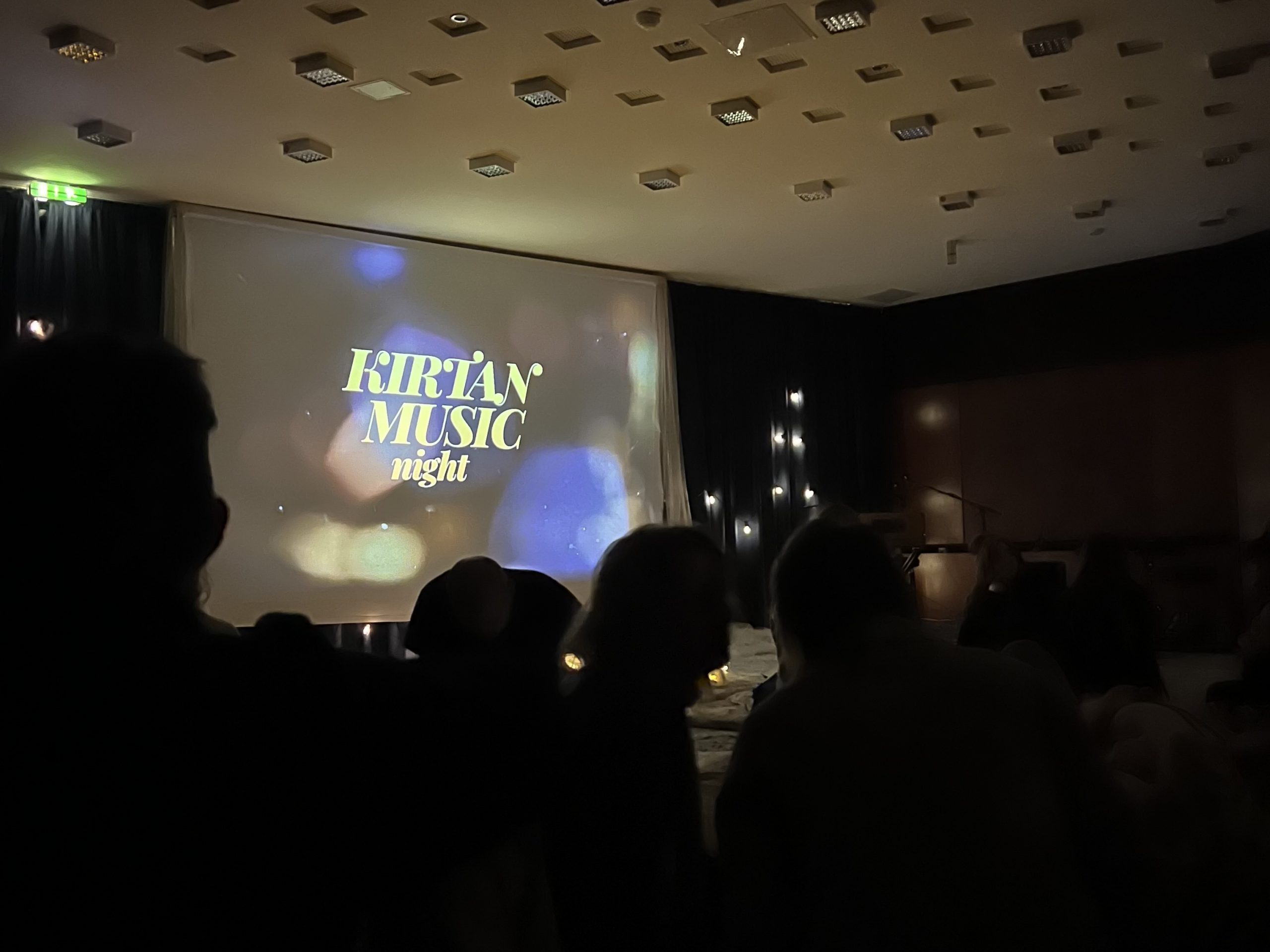
Uniting hearts and souls through voice
Listening to Mantras gives me a deep feeling of happiness, of joy and light, of gratitude and hope. This emotion gets even bigger when shared with people. It gets more intense when you yourself are the one to sing the Mantra. Repeating the same phrases on and on allows a unique sense of deep diving into a feeling that you share with all the people in the room.
A Mantra is a spiritual sound, a word or a phrase from the Sanskrit language that touches our mind and soul when we sing it or listen to it. Singing Mantras in community is called Kirtan.
Through participating in Kirtan events I can even feel the powerful energies among the audience. Come and join me on my journey through a Kirtan music night with Sacred Forest in a small room of the Meistersingerhalle Nürnberg.

Before entering the concert room, everyone puts their jackets and shoes off. It makes me feel lighter and more grounded. Grounded. It’s what the people in the room seem to feel like. They made themselves comfortable on the floor, some closer and others more apart from each other.
The musicians arrive with a little delay. I use the waiting time for arriving emotionally in the room by letting the other people’s energies arrive at my soul. Though I don’t know anyone there, I feel comfortable and somehow familiar with everyone around me.
The night begins with a small introduction to Kirtan. The soft spoken voices of the woman and the man in the front already soak me into a meditative state. We start singing along the words the man and the woman give us. Together we create a powerful choir, manifesting love and the good coming towards us.
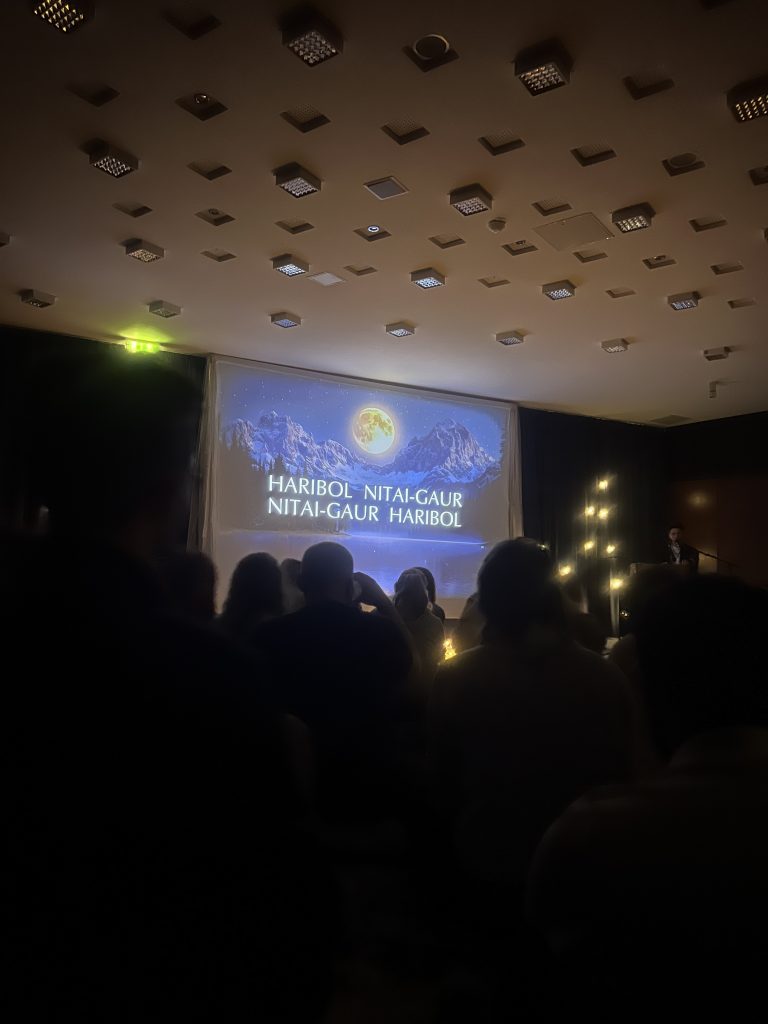
Haribol
Nitai-Gaur
Nitai-Gaur
Haribol
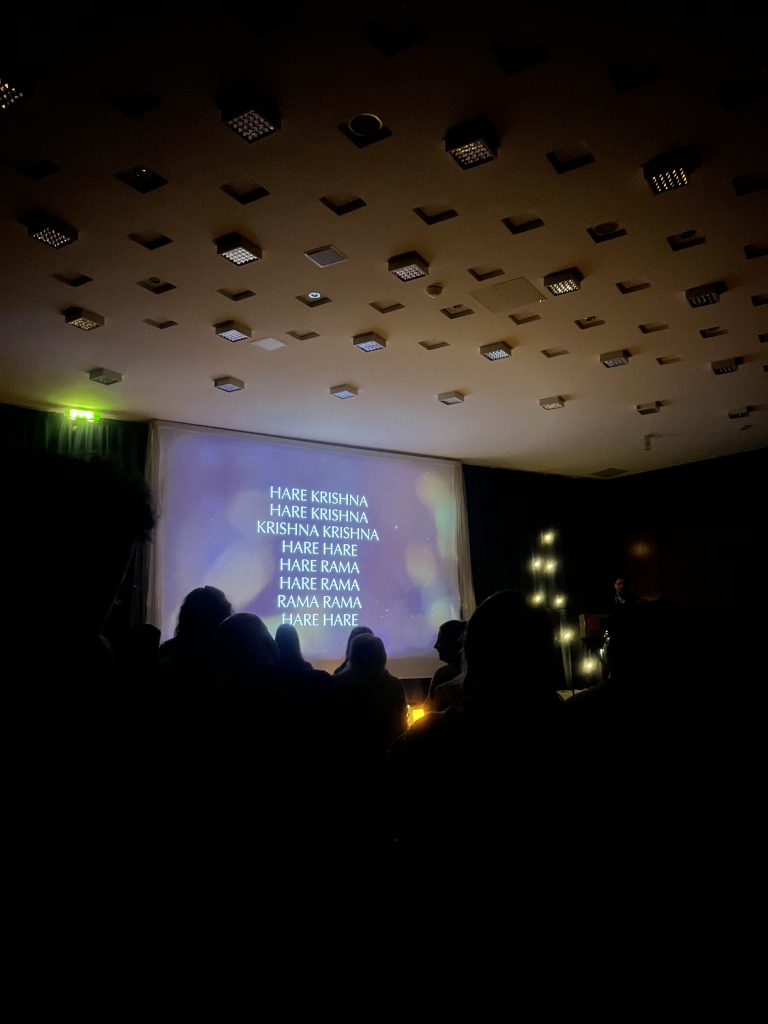
Hare Krishna
Hare Krishna
Krishna
Krishna
Hare Hare
Hare Rama
Hare Rama
Rama Rama
Hare Hare
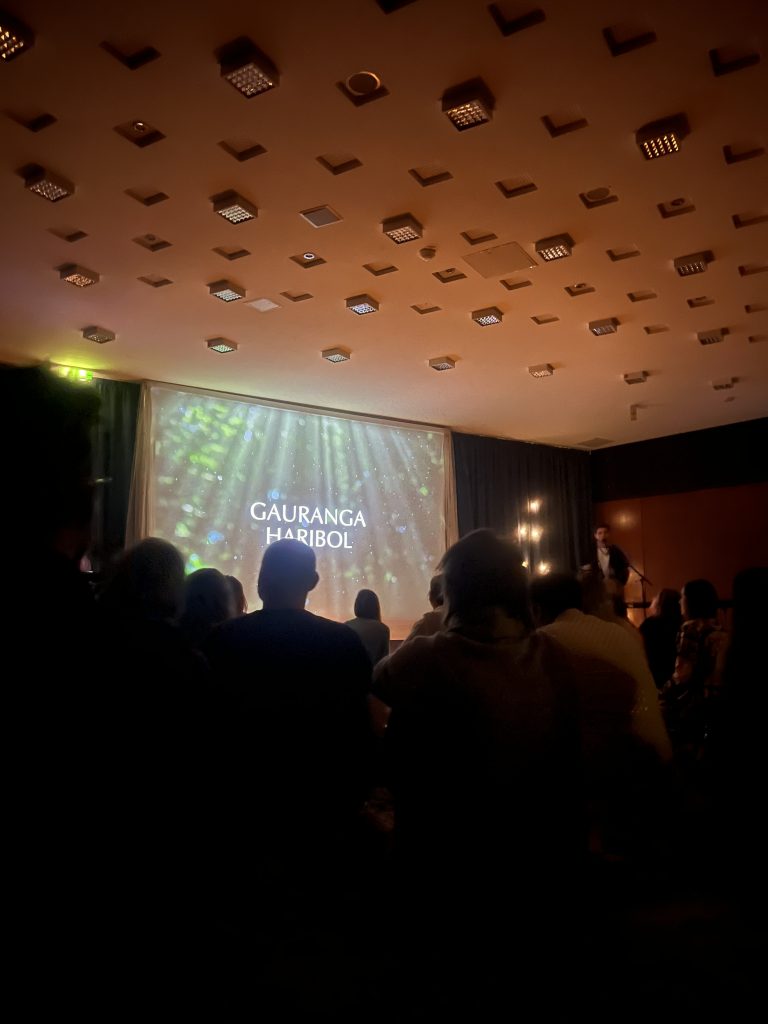
Gauranga
Haribol
Nitai-Gauranga
Haribol
When the song gets more powerful, I see how some people in the back of the room stand up to dance. They start moving their bodies gently to the rhythms of the mantras. Others seem to feel them moving and stand up as well. One in the right side of the room, another one on the left and another one in the middle.
I feel so comfortable in my position that I don’t feel ready to get up yet. Thus, at some point I feel hugged by the dancing people. Which is an amazing feeling.
When the mantras gets more and more powerful, I can’t keep myself seated any longer. I dissolve within the dancing crowd and my soul is being nurtured with love.
Chapter 16: How to listen the right way
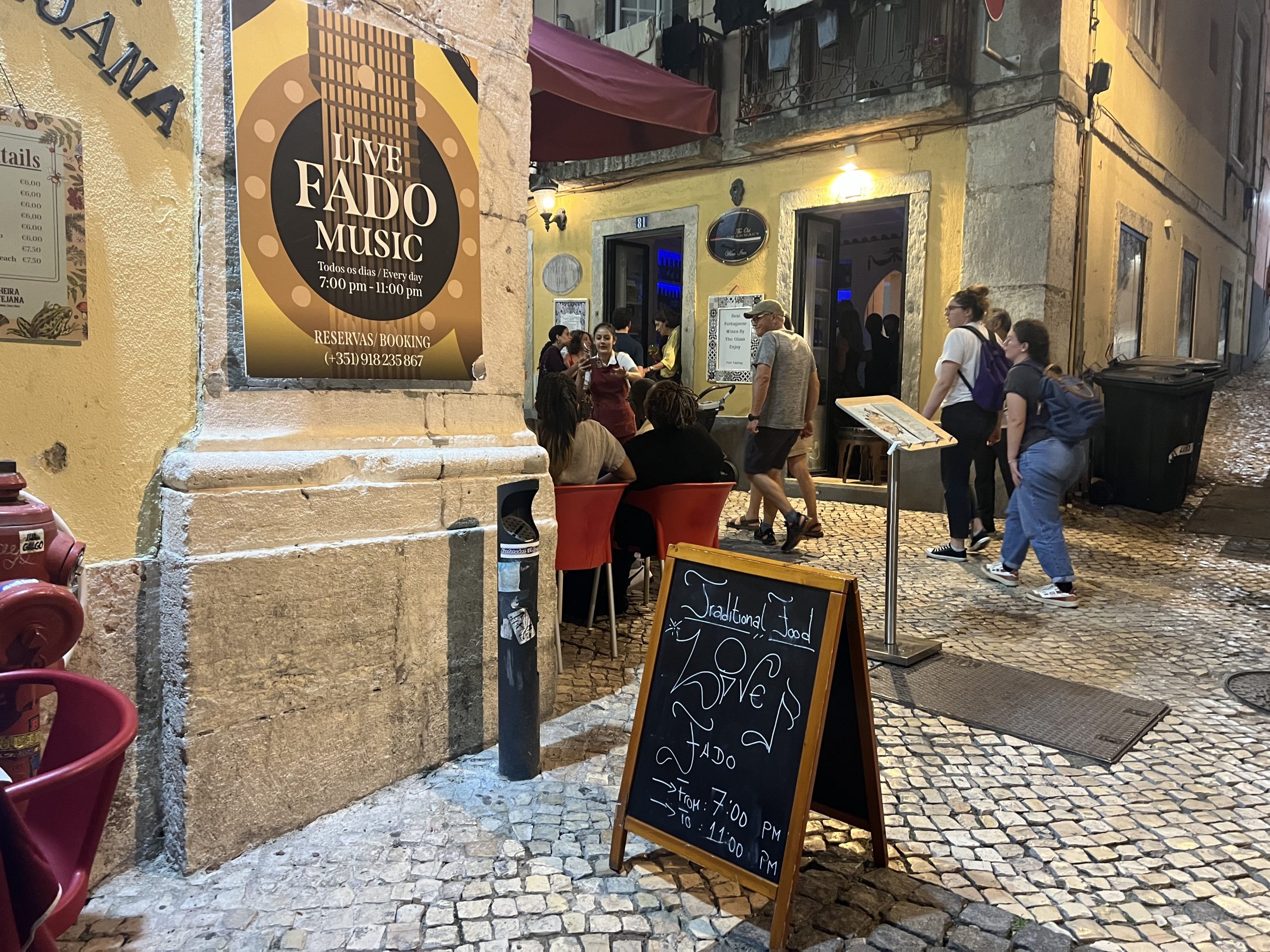
The most authentic Fado show in the city – is a promotion slogan that you will read so many times in one place that you wonder: Which of them tells the truth? And what does authentic Fado really mean? A key part of it is the strong connection to tradition, which is mirrored in the long history of Fado.
Traditionally, Fado is sung in restaurants, combined with gastronomy. And thus, some artists, as Sara Paixão and Pedro Moutinho, find that only in the Fado houses one can experience authentic Fado. Nevertheless, it happens that the food in the restaurants keeps people from appreciating the music as much as it deserves to be. This is why Fado singer Nadine prefers to perform at concert venues.
Filipa Biscia plays at different kinds of venues. She likes performing in both restaurants as well as at other evening shows. A night in a Fado house is more exhausting for her as an artist, but she also admits that it’s the more authentic way of experiencing Fado. However, she thinks that a concert outside a Fado house is an authentic experience, too – as long as the artists are authentic fadistas.
In the end, it depends on the personality of the listeners which kind of experience might be best for them. There is red and white wine, some prefer dry, and others prefer a fruity one. On the same note, there are different tastes of Fado.
Each of the “chefs” – the Fado singers – has their own way of creating a taste and each guest has their individual preferences. Thus, it is impossible to describe a Fado show objectively as a good or a bad experience. It might have been good or bad for oneself, but there will always be someone who would think the contrary. Some people might prefer a female over a male voice, prefer an A Capella show over a performance with microphone.
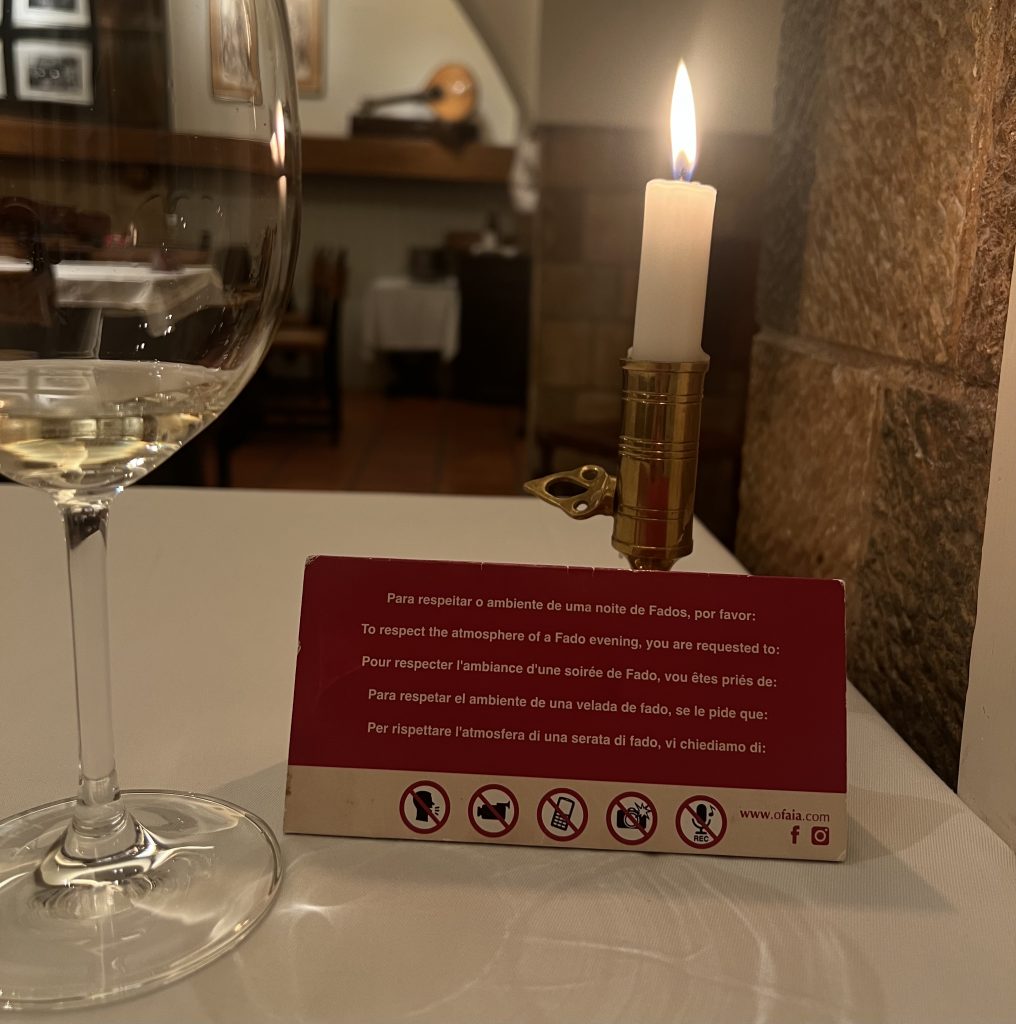
Also, the ‘way of tasting’, may vary among the Fado audience. In all the individuality we shouldn’t forget some manners of behavior everyone should stick to.
Rather than understanding each part of the lyrics, the sparkle of Fado lies in the feelings vibrating through a room when it’s sung. The feelings sent out from the musicians as well as the feelings of the listeners. Therefore, a fadista shouldn’t feel the need to explain a song, it should simply be felt. Let the magic happen.
Restaurants are places to eat, to laugh and to talk – in Fado restaurants, there are the sets of Fado determining the structure of a dinner night. And while the artists present Fado, everyone else got to be quiet – it’s the only way to listen well. In most fado houses silence during the Fado is being respected. However, there are always exceptions, depending on the restaurant and the audience. An example out of my ‘fado diary’:
Somehow accidently, I step into the Tasca de Noticias restaurant, located in the Bairro Alto. It’s one of those places that tries to attract tourists with promoting “live Fado performances”. I enter without any expectation, in the need for water and some sweet dessert. The waitress is super friendly. The problem is that she is friendly even when the Fado is played. I feel like doing something illegal when I talk to her after she came up to me to take my order. Even guitar player and singer Luis Tomar, who plays on that evening, tells me that he does not consider this a real Fado house. After having played all around the world, he is at the end of his career, thus he doesn’t have high expectations on the space he plays. He still shares his doubts to the waiters, but they are more focused on being kind to each guest.
My individual experience
Therefore, Tasca de Noticias a good place to have dinner. The Fado played there is good too. But the ambient of the restaurant doesn’t respect the Fado tradition in the right way.
When experiencing special moments, it has become a usual pattern of humans to take out their phone and take a photo or a video of the scene happening around them. This kind of behavior shifts our mental focus from perceiving the presence with one’s own senses to the effort of getting the best picture out of the moment. People want proof of having been there, but the problem is that those people might disturb those who keep saving their memories in their souls – it happened to me, in one of the most famous Fado venues in Lisbon.
Located in an almost majestic position, Café Luso overlooks the Rua do Norte of Bairro Alto. “Like a dining room of a king’s palace” are the first words in my notes. It’s the piano in the entry hall, the high ceilings, the candlelight on the walls behind the Fado musicians that make this room look so majestic. Also, in addition to the guitars there is a Cello adding a little extra point to the Fado in this venue. I sit on a small table right next to the bar, in front of me are two rows of tables. At their end, there is the musicians’ space. I only have a few seconds to admire the great Cello until a man on the table in front of mine stands up from his chair – he moves to the middle, rises both his arms with the phone in his hand. As he sits down, I see how he reviews the pictures he has taken before. They still don’t seem to be good enough, as he keeps on taking pictures, standing up and sitting down again. I cannot believe his audacity to behave that way. He makes it impossible for me to focus on the Fado happening in the front.
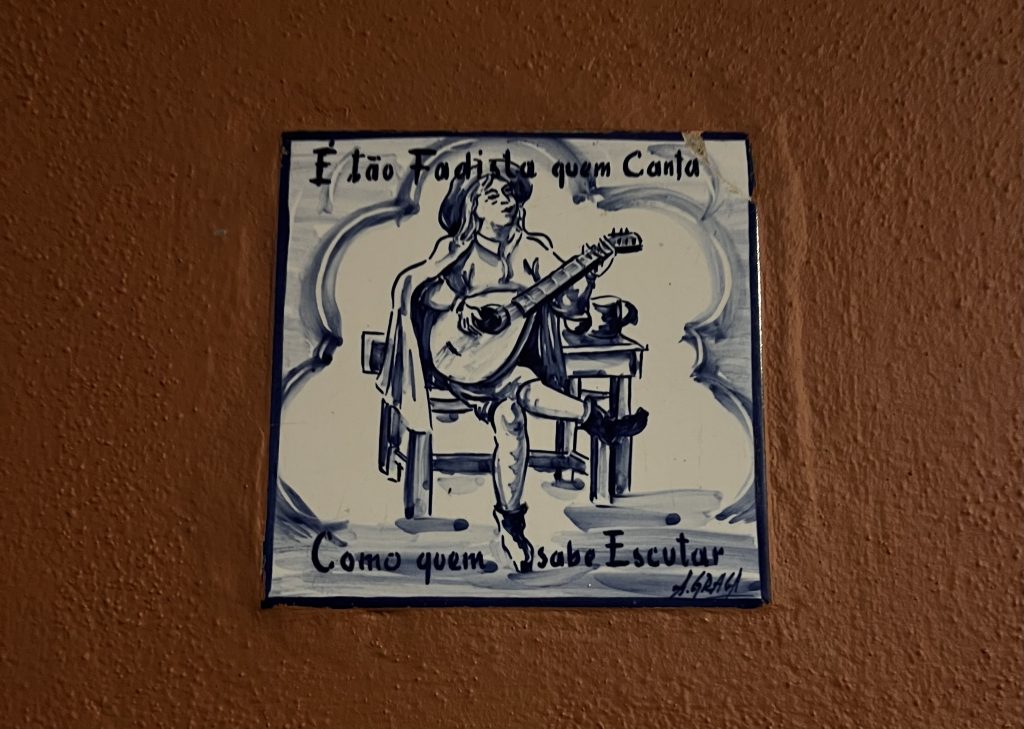
My individual experience
In the break before the last Fado set I overhear a conversation between some young women who share their amazement about the night, which has been their first Fado experience, with one of the organizers at the restaurant. He explains to them that according to a Portuguese saying they themselves have transformed into fadistas only through listening well to it (“E tao Fadista quem Canta Como quem sabe Escutar”). And it makes me think again of the man taking pictures, who has not been able to listen well, thus doesn’t deserve the title of a fadista…
Of course, it is nice to keep a memory together with a souvenir in our camera roll. However, when it comes to live music, it is not our phone but rather our heart that will keep the energy and the memories from the experience in the best way possible. To keep the listeners experiencing a Fado show with their soul rather than through the camera lenses and in respect to the artists, some Fado houses don’t allow to take videos or even photos during the performance. Nevertheless, in many restaurants it is still officially allowed; and that’s okay, as long as one does it consciously and with respect towards the musicians and other guests.
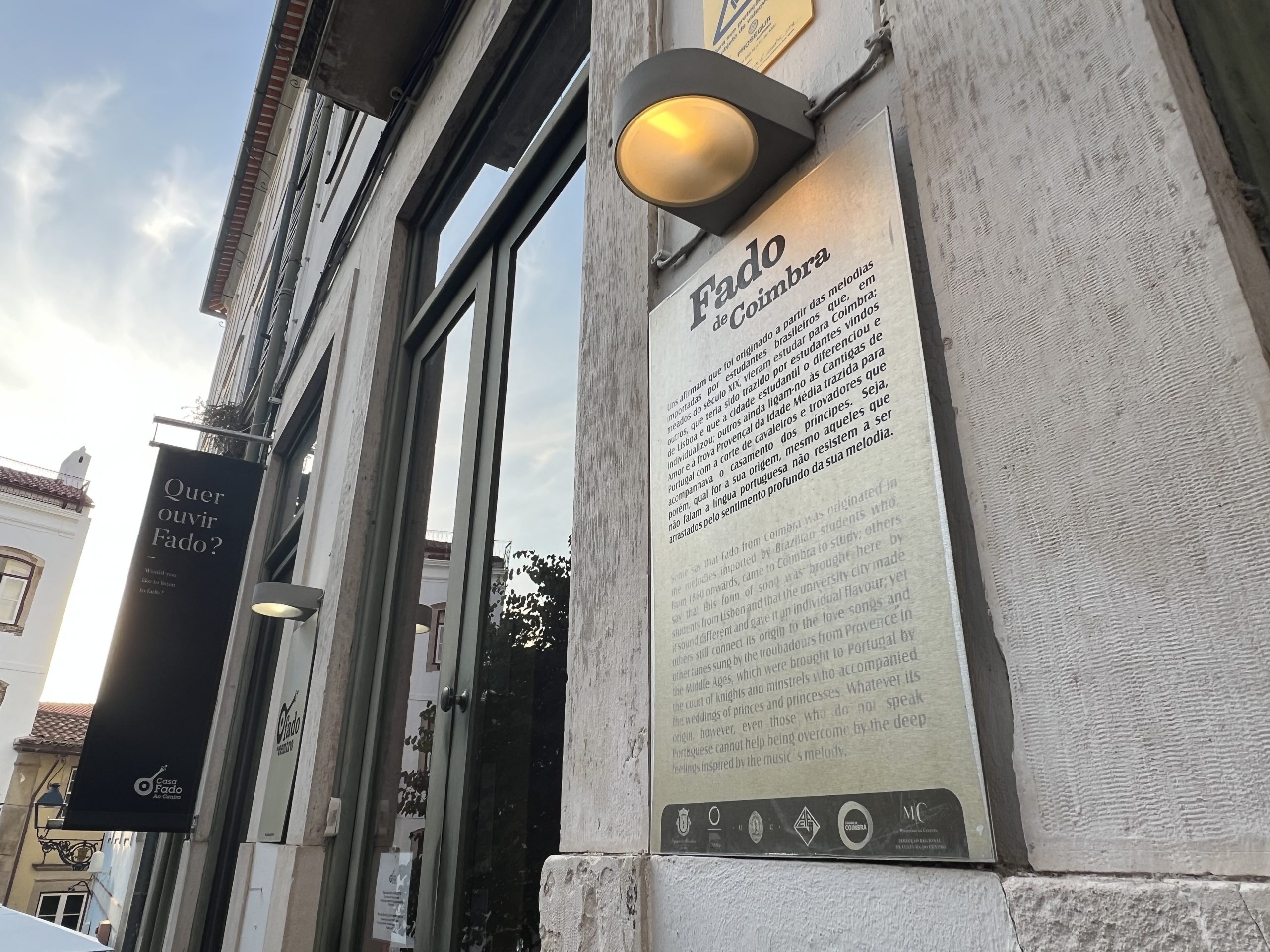
Chapter 15: Students’ operatic love serenades
Impatient guests wait in front of the door to the Fado ao Centro concert room and I am one of them. The Coimbra Fado presentation starts at 6 o’clock in the evening. Only a few minutes before they finally open the doors and let us enter. Free choice of seats. Amazed by the darkness in the room and the pictures on the walls, I take an aisle seat in the second row.
When you spend a day in Coimbra, you will realize that there is not much to do than visiting the university. It seems like it has always been like this. Usually, students are busy with studying. However, in the past the students of Coimbra got creative. Apart from studying, they found love in putting rhymes together for the women they admired. In the second half of the 19th century male students started singing these poems on the streets of Coimbra – and the Fado do Coimbra was born.
When everyone has found a place in the fully booked venue, the black curtains to the black backstage zone are slowly getting closed. A film starts playing, introducing everyone to the tradition of the Fado of Coimbra. The following Fado presentation will be completely different from those I experienced in Lisbon. Coimbra fadistas are even more expressive and operatic with their way of singing; and their poems talk rather about love than about Lisbon. Some of the classics presented at Fado ao Centro are E Alegre se fez triste, composed by Manuel Alegre, the guitar instrumental Variations in G Major by Artur Paredes, or Raul Ferrão‘s famous Coimbra – internationally known as April in Portugal.
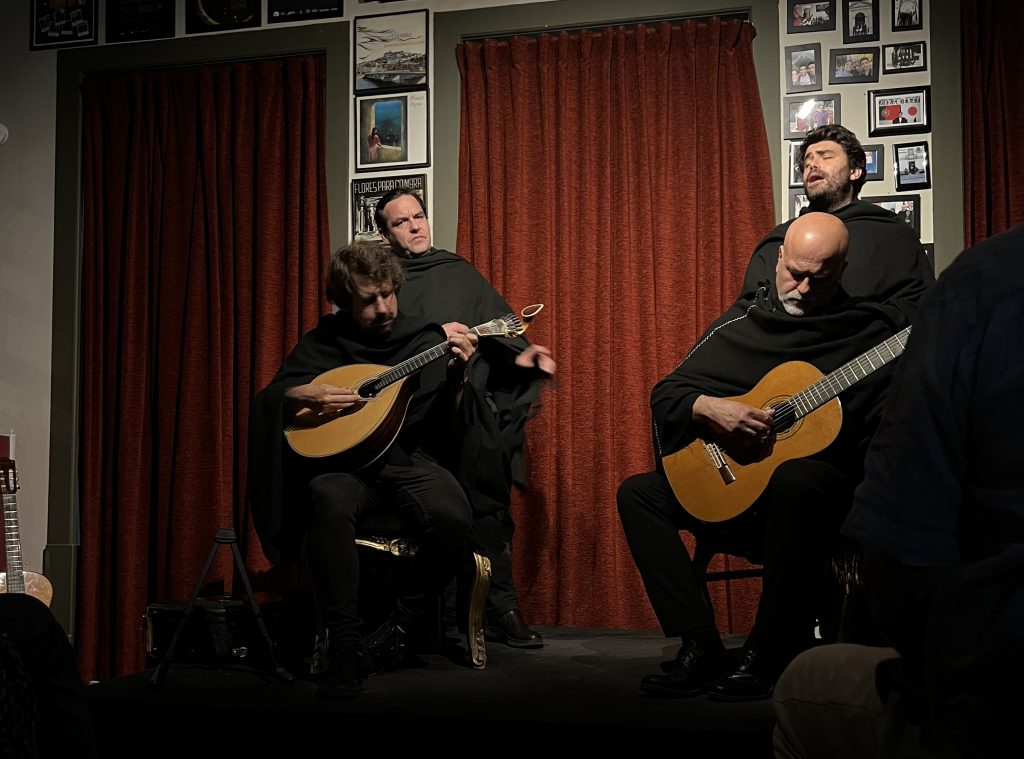
The classic expression of the Fado of Coimbra is the serenade, in which a suitor sings at the door of a potential lover, who may respond by appearing at the window or by switching the lights of the bedroom on and off if she liked it. These and more characteristics of the Coimbra fado are presented live at Fado ao Centro in the most traditional way possible. João Farinha founded the space in the centre of the city to keep the precious tradition of Coimbra Fado alive. I talked with him after his show on a Friday evening in October.
SG: When did you start doing these fado concerts here & how did you came up with the idea?
JF: 15 years ago, I quit my job and opened this place with two befriended guitar players. It was my idea to do this as a business. Before singing was my hobby and when there was the chance of having this place for us in the oldtown, I thought it would be a good idea to make this our place. At the beginning everyone said, fado houses are at night. But we thought, well the street is full of people during the day, so why not do Fado during the day? So that’s the main principle and it’s without food.
SG: The offer of these daily shows is now actually growing.
JF: Yes, and we were the first ones.
SG: And I think there is a difference between Lisbon and Coimbra Fado. Because Lisbon Fado has its origin in the taverns but Coimbra Fado comes from the streets.
JF: Yes, and from the old salons of the upper-class. And the students would go there to play.
SG: And is it still happening that students play on streets?
JF: Sometimes, sometimes they do. Not as much as many years ago. The buildings are higher now. So, it’s more difficult.
SG: And would you say that you as a Coimbra fadista you can also sing Lisbon Fado?
JF: The technique is completely different. Because the Coimbra kind of Fado is more lyrical. It has also some technique from Belcanto. And about the Lisbon kind of Fado some say that you don’t even have to have a voice to be able to sing it. Because it comes straight from the soul. And you don’t need a great voice. On of the greatest of all times was Marceineiro. He had very little voice, but he touched the people with his way of singing. But the Coimbra kind of Fado lives on the performance of the singers. Of course, in Lisbon fado there are also many singers, especially women, with powerful voices, spectacular voices. But you don’t need that in Lisbon. And here in Coimbra you need it.
SG: To me it also seemed a bit like opera.
JF: Yes, it’s a bit operatic. Because the students in the 19th century tried to sing like the opera singers did at that time, their hometown songs, love songs to sing for the girls. The opera was the fashion music of that time.
SG: And are you afraid that this tradition will die? There are only very few places where it’s still played.
JF: Yes, abut there have been time where it was worse. Now lots of people are singing and playing. I believe it can change. Now. The first girls are playing too. But actually, we have this kind of places that didn’t exist 20 years ago. So, the musicians had no place to play. Now there are professional musicians of Coimbra Fado, it’s something new that never had been. So, I believe the future is good.
SG: I also saw that there are several music schools in Coimbra.
JF: Yes we have a school that teaches the Coimbra Fado, the instruments and the singing. And there are also some other privat schools.
SG: And do you also think that Coimbra Fado might have a perspective outside of Coimbra? For example, in Lisbon, where there are much more people to reach.
JF: there have been places like that, there was one in Lisbon called “Coimbran tavern”. Cause there are lots of former students from the Coimbra university that live in Lisbon. And they tried to do something like that in Lisbon. But I think they were open for about ten years and then closed when the pandemic came. But in Porto there are also former students. And there is also the tradition of the Coimbra Fado. There are some places where they play the two kinds of Fado.
SG: Yes I was at one. The Fado Maior do Porto.
JF: But the unique one in is our place here in Coimbra.
SG: So you sing here every day?
JF: Almost. During the week I usually sing here. On weekends we have concerts in other places of Portugal and the world. Or sometimes I also just need one or two days to rest.
SG: But this here is your place and you own it, right?
JF: Yes, yes.
SG: And now it’s already time for the next show?
JF: Yes, it’s high season now. September, October. April, May, June. And sometimes we get the 6 o’clock session crowded and then we open another one.
SG: So you always do that when it’s full?
JF: Yes, we always open another one then. Sometimes we also have concerts in the morning, afternoon or evening for private groups.
SG: Ah I see, so before 6 o’clock there was one of those private concerts.
JF: Yes, it was a private group from Taiwan. So, it’s a way of living now. It was something that the older guys never thought of and never thought it would be possible. And it was even not very well seen to make a living out of this. Because most of the guys that study at the university they would be lawyers, architects or engineers. I took economics and management. And my father also sang but he was skeptical to make it as a fulltime profession. I worked as a manager for about 10 years and then I quit my job for this place. But it was something new. You can have lawyers singing.
SG: You give musicians actually the chance to live from their passion.
JF: The guitar player he is an architect. And he quit his job for the music.
SG: And you make that possible. Thank you for talking with me João.
From the conversation with the passionate Coimbra fadista João Farinha the great differences between the Lisbon and Coimbra fado traditions became clear. The Fado of Lisbon is played in lots of places, whereas the presentation of Fado of Coimbra is limited to very few venues in the town. But still, the musical characteristics are pretty similar: a singer accompanied by a Portuguese guitar and an acoustic Fado guitar. Some scholars (Nunes, 1999 / Nery, 2012) “trace the genesis of the Fado of Coimbra back to a process of regionalization of the Lisbon Fado”.[1]
At its beginnings, Lisbon Fado was associated with taverns located in workers’ districts. Coimbra, on the other hand, has been determined by a highly educated population. It was the sons of the nobility who started spending their nights in bohemian taverns where popular Fado was sung. Continuously, “this genre was progressively introduced into the private homes of the upper classes”. In 1853, the first academic anthem was sung, written by Cristiano O’Neil Medeiros and José Augusto Sanches da Gama and it became a tradition for graduating students to sing some of these songs as a ‘gift’ to the city. Nowadays, travellers can give a gift to the city, too. It is listening to and thereby appreciating the serenades of Coimbra Fado…
[1] Costa, J., & Nossa, P. N. (2017). Beyond Sight and Sound: Fado of Coimbra, Intangible Heritage with Touristic Value. Rosa dos Ventos – Turismo e Hospitalidade, 9(4), 557-568. https://doi.org/10.18226/21789061.v9i4p557
Chapter 14: Nuances of voice and guitar strings
Lisbon has Lisbon Fado – Coimbra has Coimbra Fado – and Porto… has both!? An obvious phenomenon for every tourist walking through the streets of Porto is the promotion for the “authentic” and “traditional” Fado shows in the early evenings. Among all these offers, Casa da Guitarra and Fado Maior do Porto are outstanding places. They teach visitors about the characteristics of the Portuguese Fado traditions: the Lisbon and the Coimbra Fado.
Closely connected with both Fado styles is the Portuguese guitar, which may appear in different forms. In the free exhibition at Casa da Guitarra, you will get to know instrument makers, artists and a huge variety of string instruments. And, right in the traditional instruments shop, there are offered guitar workshops as well as daily Fado concerts.
As displayed in the exhibition, Portugal has a long musical tradition of string instruments: they have been part of the population’s daily life for centuries, in both work and leisure. Above all, it’s the sound of the Portuguese guitar that fascinates people from other countries. In Fado, the instrument has the unique ability to express feeling and create a narrative through responding to the singer’s melody without resorting to words.
Thus, the guitar is a symbol for the Portuguese cultural identity. Its origin is linked to a line of evolution that goes back to the European cittern and the English guitar. Probably it were British merchants and musicians who brought the English guitar to where local artisans adapted the instrument to their preferences. That being said, it acquired new technical, aesthetic, and sonic characteristics.
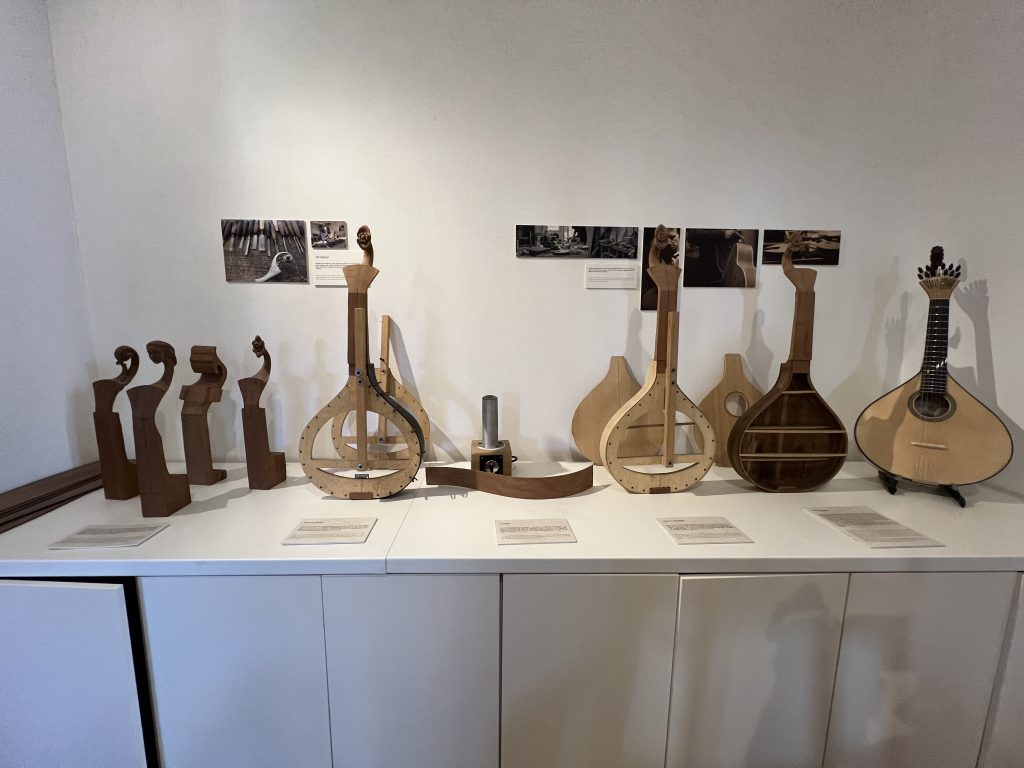
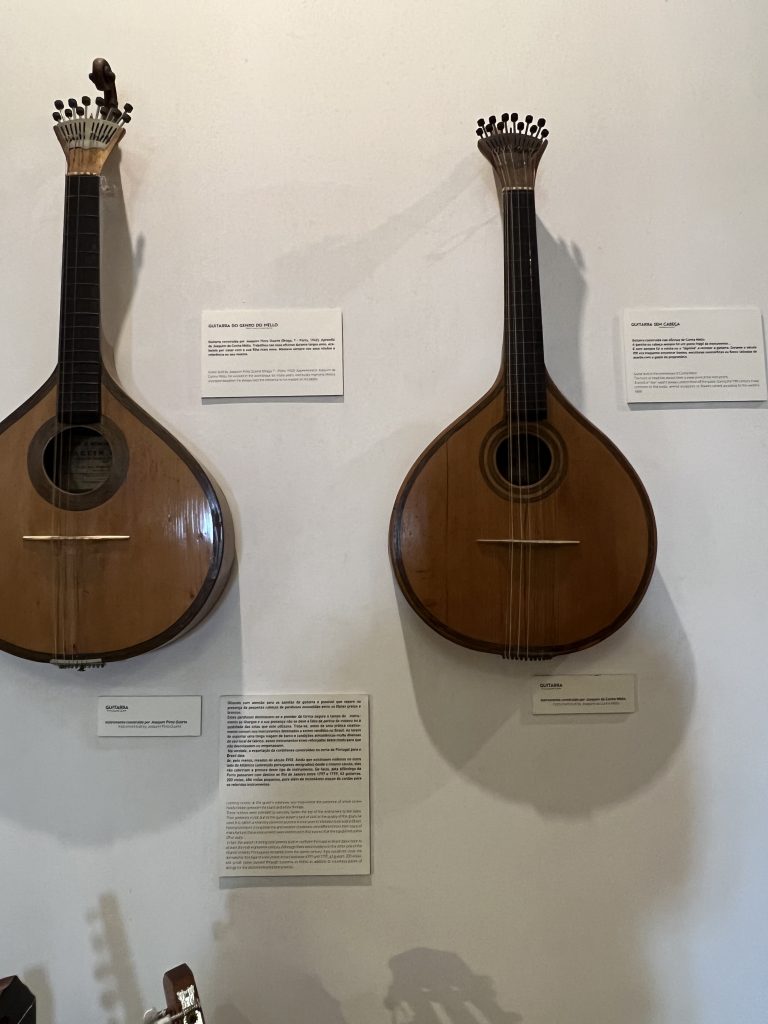
To build a guitar, craftsmen from different areas need to work together, as the instrument consists of various materials. Metal is need for tail pieces and tuning machines, bone for saddle and nut and the guitar head is carved of wood. At Casa da Guitarra one can see “the assembly of the neck with the mold of the instrument to be built”. Decorative elements can be crucial when differing between the Lisbon and the Coimbra guitar model.
“Nowadays it is common to identify the model of the guitar by its headstock hook. The scroll (or snail) tops a Lisbon model guitar; a simpler teardrop-shaped hook identifies a Coimbra guitar, while a more elaborate head, in the shape of a flower, animal, or human, corresponds to a Porto guitar.”
Casa da Guitarra
After the decoration is built, artisans need to be patient: it’s time for bending the thin and delicate strings around the mold, which is only possible with the use of heat. In the next steps, they glue the different parts of the guitar carefully together.
“The top is also an essential piece for the mechanical-acoustic functioning of the instrument as it directly receives the vibrations produced by the strings and transmitted by the bridge. The braces, in varying numbers and arrangement, are first glued inside.“
Casa da Guitarra
Finally, the fingerboard completes a guitar – it is made of high-density wood and will support the frets that allow you to stop the string according to musical notes.
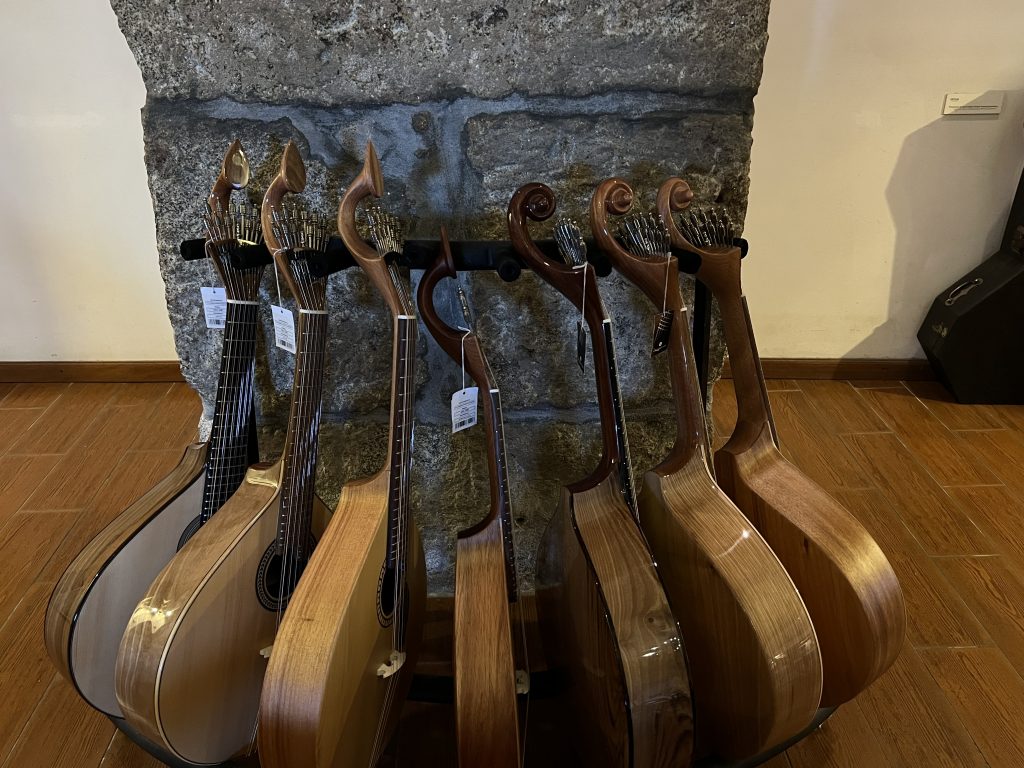
The huge diversity of guitar models reflects the creativity of their creators who used different shapes, dimensions and materials.
With the emergence of large music stores, it has become increasingly common for instrument labels not to identify their manufacturers. The exhibition at Casa de Guitarra highlights some of the most important guitar builders, whose names deserve to be remembered:
Over time, many guitarists have become true legends for their virtuosity and emotion. The most recognized ones are Armandinho (Armando Augusto Freire), Carlos Paredes, Pedro Caldeira Cabral and António Chainho.
Not far away from the Casa da Guitarra one can experience both styles of Fado in only one concert – Fado Maior do Porto makes this unique experience possible. Every evening at 19h, they open their stage on the riverside of Porto to the music group Canto do Rio and other Fado singers. The combination of Coimbra and Lisbon Fado makes this show stand out from others.
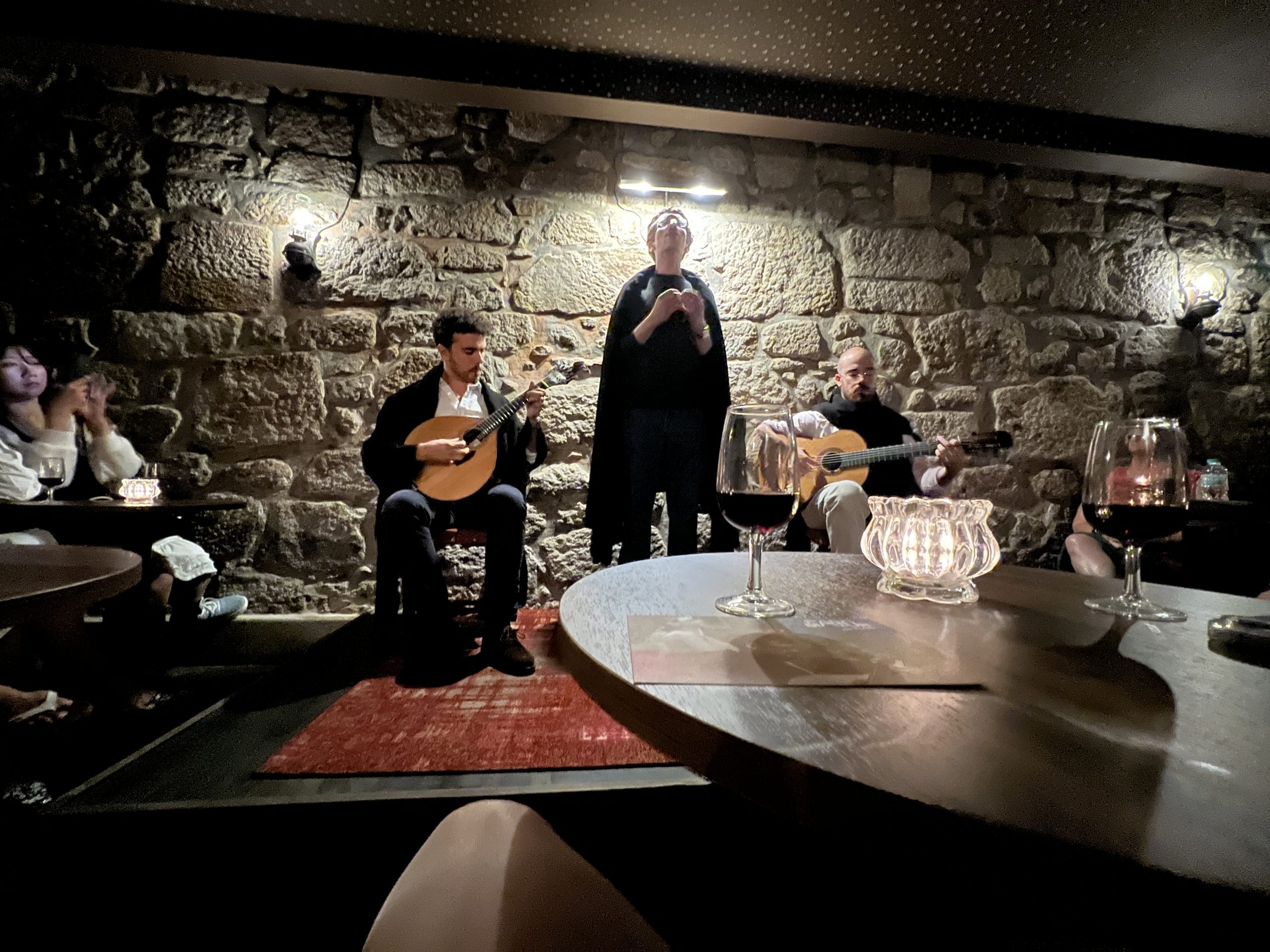
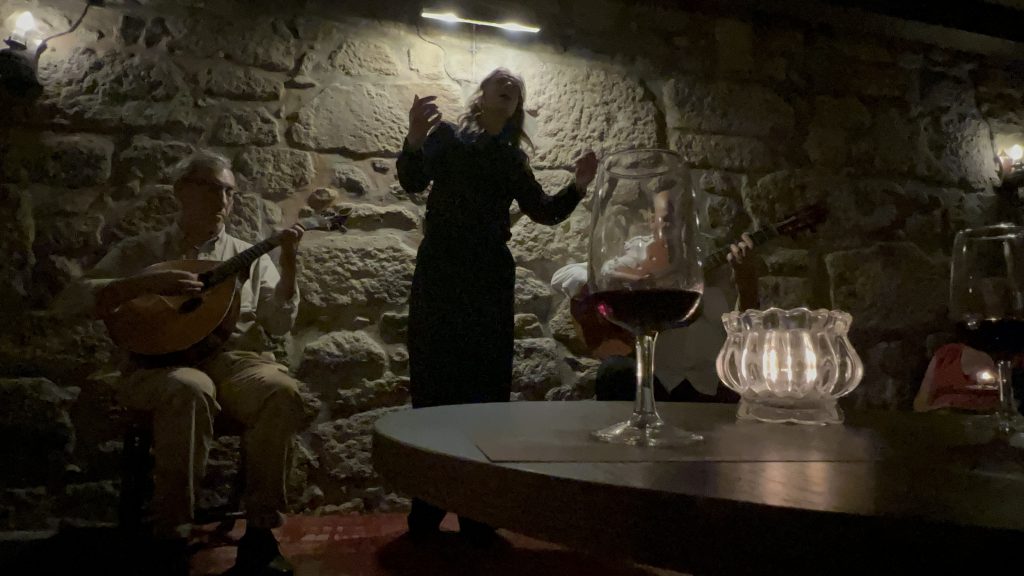
At 18.30h guests already arrive in the intimate venue of Fado Maior do Porto. With walls out of stone and low ceilings, the place seems to like a comfortable mix of a restaurant and a living room. It’s worth coming early to save yourself seats close to the small stage in the middle of the room.
I get to sit in the first row. The woman who welcomed me at the door lights the candles and brings everyone a glass of port wine. Impatiently, I look at the red chairs and carpet on the stage in front of me. I clink wine glasses with the guest next to me.
A few minutes after the official beginning musicians come to the front. They wear black ropes, which is a characteristic for Coimbra Fado. the singer jokes, “we don’t wear them because we think we are superheroes”. He also explains the music style’s connection with university students in Coimbra. When the fadista of the Canto do Rio group sings Olhos Claros, his voice slowly gets more voluminous from tone to tone, culminating in an operatic way of singing.
The set of Lisbon Fado is presented by a woman. She brings femininity and, of course, a lot of saudades to the stage. I automatically compare her way of singing to the Coimbra Fado set we’ve heard before. And my impression is that the Lisbon Fado is more playful and more diverse in terms of emotion and soulfulness.
At the end of the show, the Italian guy next to me shares his opinion with me. He resumes about his first ever Fado experience: “I prefer the voice of a woman for Fado” and “I didn’t like so much that they talk between the songs, because that took me out of the feeling.” Others might think the exact opposite. Explanations may help for understanding the content of a song. The beautiful thing is that each visitor makes their individual experiences in the concerts, each of them listens and receives the music with their very own heart.