
Chapter 11: Welcome to the Fado Queen’s home!
“I came into life singing” – in one of her first written poems Amália Rodrigues describes the crying of her birth as the first song she sang.
I came into life singing
Amália Rodrigues
The first lament I sung
Though it was sung while crying
With feeling that it rang
From 1920 to 1999 she was flourishing and spreading her music throughout the world. Visiting her house will proof you that she wasn’t just a talented singer, but also a woman with sense and style. For many reasons she is celebrated as the greatest Fado legend of all time. Amália Rodrigues defines Fado as:
“a very mysterious thing, you have to feel it and you have to be born with the anguished side of the people, to feel like someone who has neither ambitions nor desires, a person…as if one did not exist. That person is me and that’s why I was born to sing fado.”1
Amália Rodrigues
A century filled with Amália Rodrigues’ grace
She knew that she would want to open her house for the public, so before her death she founded her own foundation, that is today in charge of managing the house museum. Everyone who’s interested can visit her house and take a guided visit through its rooms. The museum’s tour will bring you insights into her life and personality.
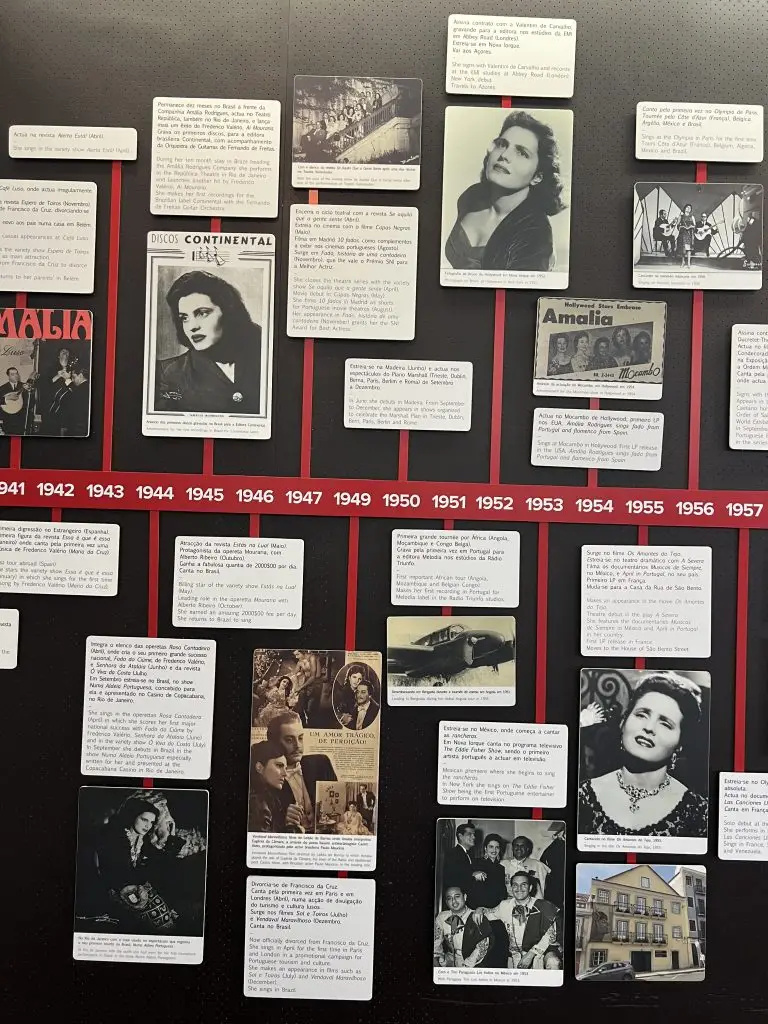
The first room of the museum showcases Amália’s biography on a timeline full of marks and information. Born to a poor family in Lisbon, she discovered her love and talent for singing at a very young age. Her parents wanted her to marry before she would sing in the Fado clubs, as the guide in the museum tells me. So, in 1940 Amália married the Portuguese guitar player Francisco da Cruz. The marriage only lasted a few years. Amália was one of the first women in Portugal to make a divorce.
And soon, on one of her trips to Brazil she met her future husband César Henrique de Seabra Rangel, who would stay by her side until his death in 1997. Two years later, on 6th of October 1999 Amália returned to the heavenly angels. An era came to an end.
Globally known and loved
Nowadays, the internet allows us to watch and listen to concerts in other countries, which makes it also easier for artists to become internationally recognized. Amália lived in an era where there were no such streaming platforms as Spotify or YouTube to distribute music through.
Thus, she contributed her music through singing in the real world. She travelled to various countries on different continents. Her international orientation is reflected in her language skills: She spoke and sang in Portuguese, French, Italian, Spanish and English.
Amália Rodrigues embodies an emblematic character
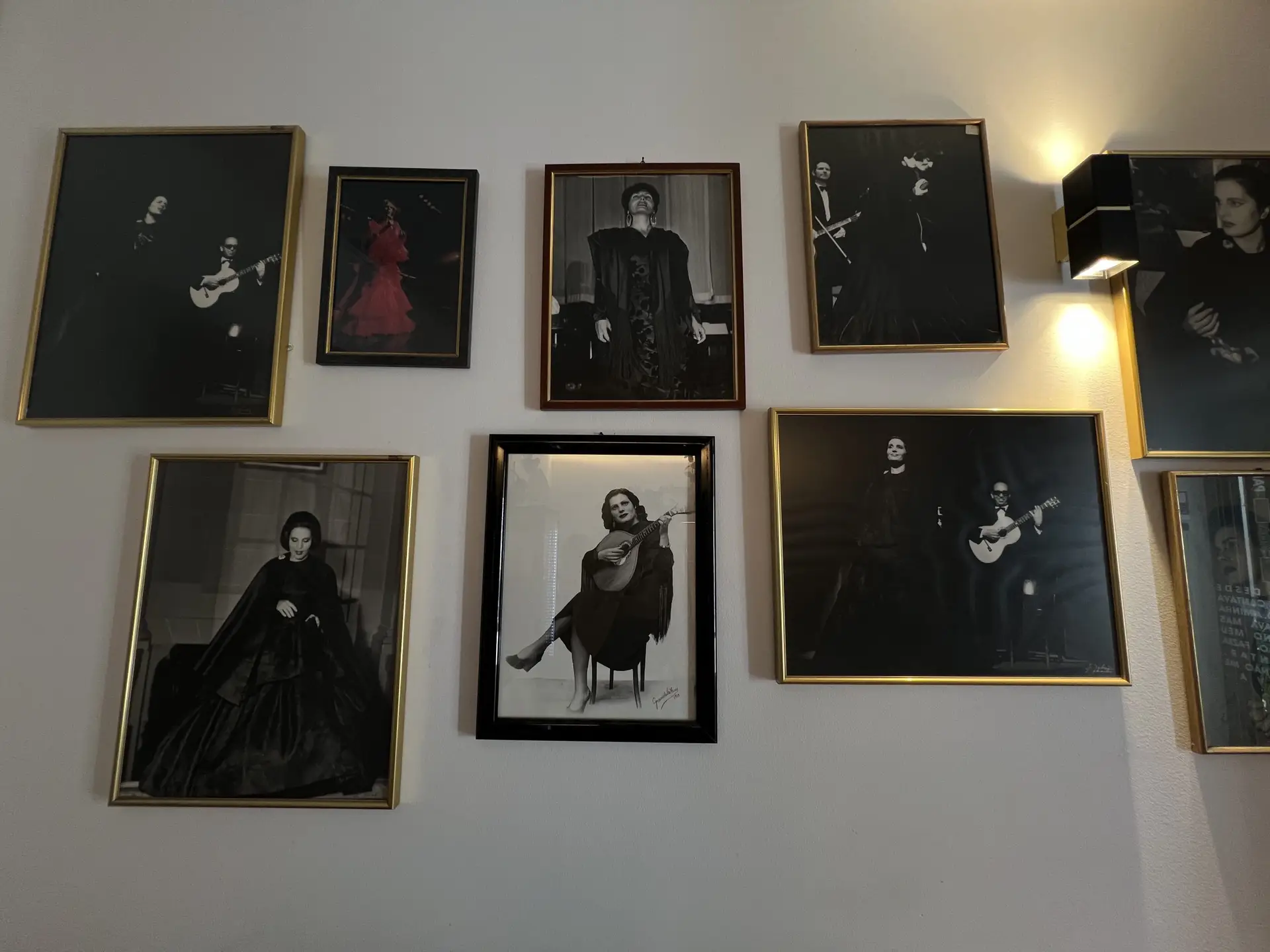
Several paintings and portraits of Amália decorate the house – they show her at the age of 20 to 26 and 70. She was a beautiful and charismatic woman in all these stages of her life. She was a woman that turned to be almost kind of an icon. You will barely find a Fado house in Lisbon that has not hung up portrays of Amália on its walls. And there is more behind those portraits than (just) a reminder to her great Fado singing. In a way, she embodies freedom and a unity of nations.
Somehow, she managed to keep the balance between a world star and a sensitive, charismatic woman. All her elegance and grace, the diversity in one personality, can be explored in Amália’s house museum in Lisbon.
The clock room shows her love for fashion. She even designed many pieces by herself. When she sang Fado, her dresses on stage were black. She also showed her love for colourful outfits in international shows singing folklore: from Samba in Rio to Flamenco in Spain. 2000 accessories and 200 shoes are still to be seen in her home and proof how much Amália took care of her appearance. The amount of high heels shows that she wasn’t a tall person at all. In her bedroom one will find many divine statues and pictures that show her deep connection with religion.
Notes from the Fado Queen’s heart
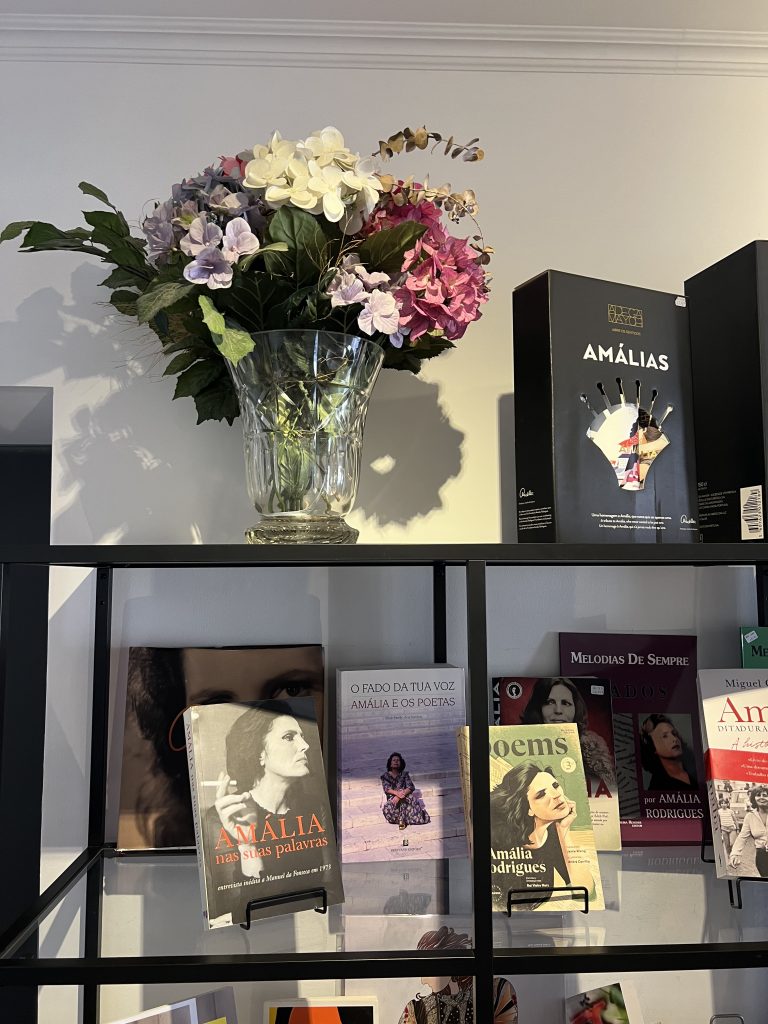
After I walked through Amália’s house, I felt like I got to know her in the most intimate way possible. Until I found a book with collected poems written by her. And when I read it, even though I cannot talk to her anymore face to face, it feels like her soul is talking to mine through her poems. Her passion for flowers cannot only be seen in her house and garden but also in her poems, as for example in Rosa vermelha, Gostava de ser quem era, and Flor de Lua.
Gostava de ser quem era
Amália Rodrigues
Pois quando eu era menina
Tinha toda a primavera
Só numa flor pequenina
I’d like to be who I once was
After all when I was young
In a single tiny flower
I had a whole springtime sprung
She herself describes her trajectory as a poetic creator in an interview with Vitor Pavao dos Santos: “I always liked writing poetry, I had a knack of ceremony, to avoid giving a speech, I’d make acknowledgements with verse, with quatrains.”
However, she was also critical with her writings: “I know I’m not a poet, but I’m able to come up with lyrics to sing, as good as the ones that are out there.” Rui Vieira Nery notes that in Amália’s poems there are hardly found any references to Lisbon. She sang other poet’s works, too: from the marches of Raul Ferrão to the elegies of David Mourão-Ferreira or Alexandre O’Neill.2
The way Amália has combined her talents as an actress, poet, stylist, fadista and multilingual singer is unique… Her life fills a century with grace. She brought her music to countries all around the world, while staying close to the roots and at the same time opening up for other cultures. being travelled around the world.
Leave a Reply