
Chapter 7: In the footsteps of Fado
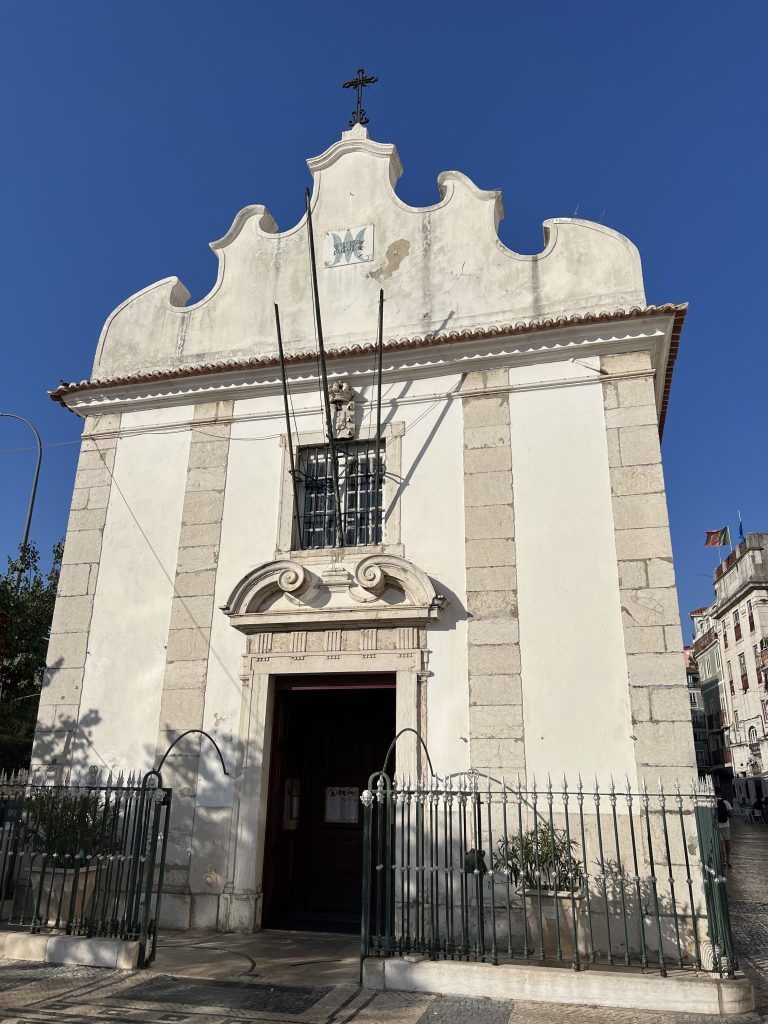
Walking through the streets of Mouraria with a fadista is like being guided by a Hollywood actor to the Hollywood sign. We start from Rossio Metro station, from there, Pedro Moutinho leads me right to the edge of the Mouraria bairro. There he draws my attention to the Capela de Saúde. The small chapel is, as Pedro tells me, a reoccurring theme in many Fados.
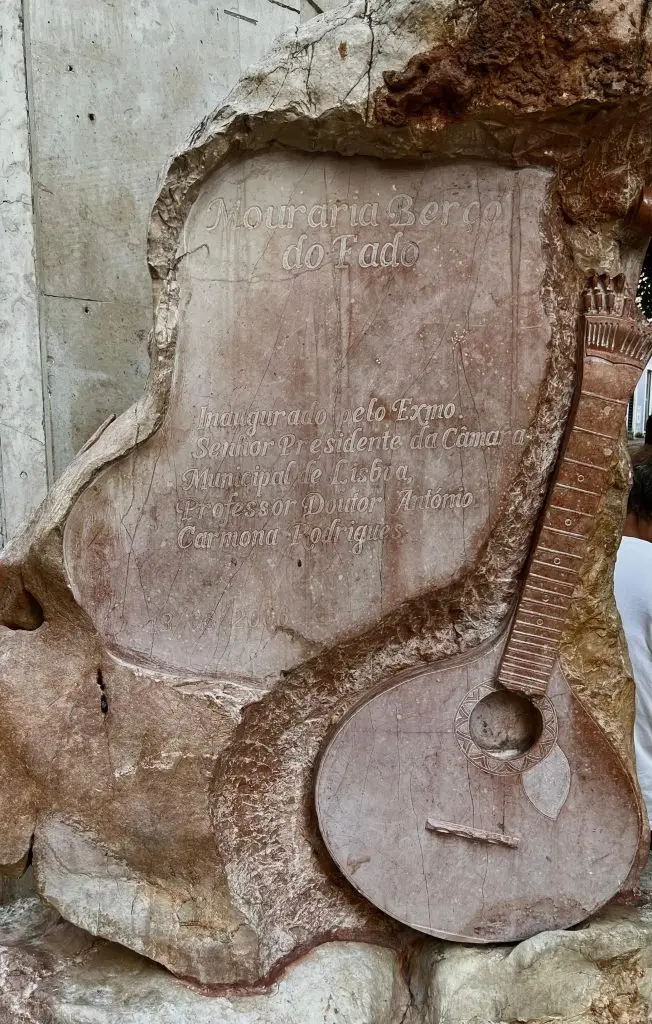
Going a little further we reach the beginning of the Rua do Capelão, which is marked by a monument. Its inscription frames Mouraria as “the cradle” of Fado. It’s the place where the music was born and grew up. Later, Fado houses were opened throughout Alfama and the Bairro Alto which nowadays attract the tourist crowds.
We walk up the streets, pass by the photographs of Camilla Watson’s street exhibit Retratos de Fado. As it was her goal, she managed to make Mouraria’s connection with Fado visible. Right alongside this road there is the house where Fado legend Maria de Severa was born and has lived until her death. The house has been renovated, but still, it breathes in and breathes out the sounds of Fado: “today my brother has his restaurant there”, Pedro tells me proudly. His brother Helder is also a passionate fadista and on top of that a food enthusiast and restaurant owner.
Pedro Moutinho’s memories hiding in Mouraria
Walking down a big staircase in Mouraria, a nostalgic memory comes to Pedro’s mind. It was in that street where he filmed the music video to the song Um Resto de Mouraria, which is nostalgically themed in black and white. What’s not visible in the video is that Pedro had an audience when it was filmed.
“Here in Mouraria people know me, they know who I am and my songs. And when we filmed, we played the song on playback so people heard it and looked outside their doors and windows.”1
Pedro Moutinho
Then we stumble into a museum-like house, where Pedro right away comes into chatting with the man working there. The museum is a homage to the famous fadista Fernando Maurício. He composed lyrics with the age of 16, parts of it can be read on the museum’s walls. Fado seems to flow through the vein of the Rua de Capelao: Fernando was born right in front of Maria de Severa’s birthhouse, just 100 years later. A coincidence?
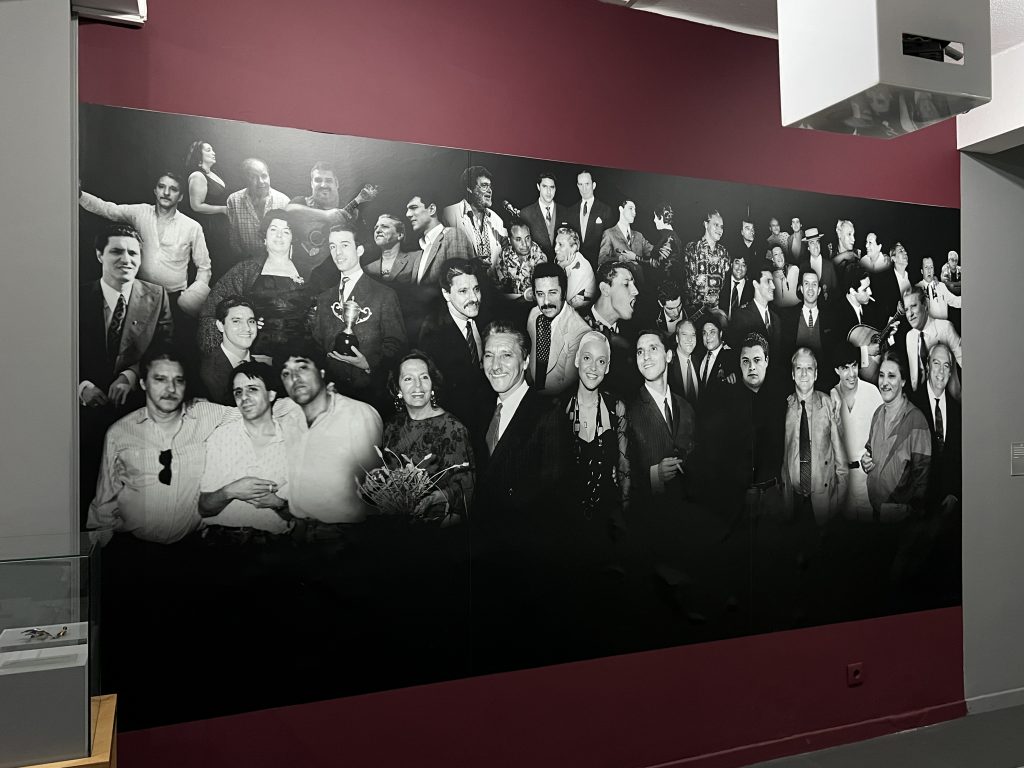
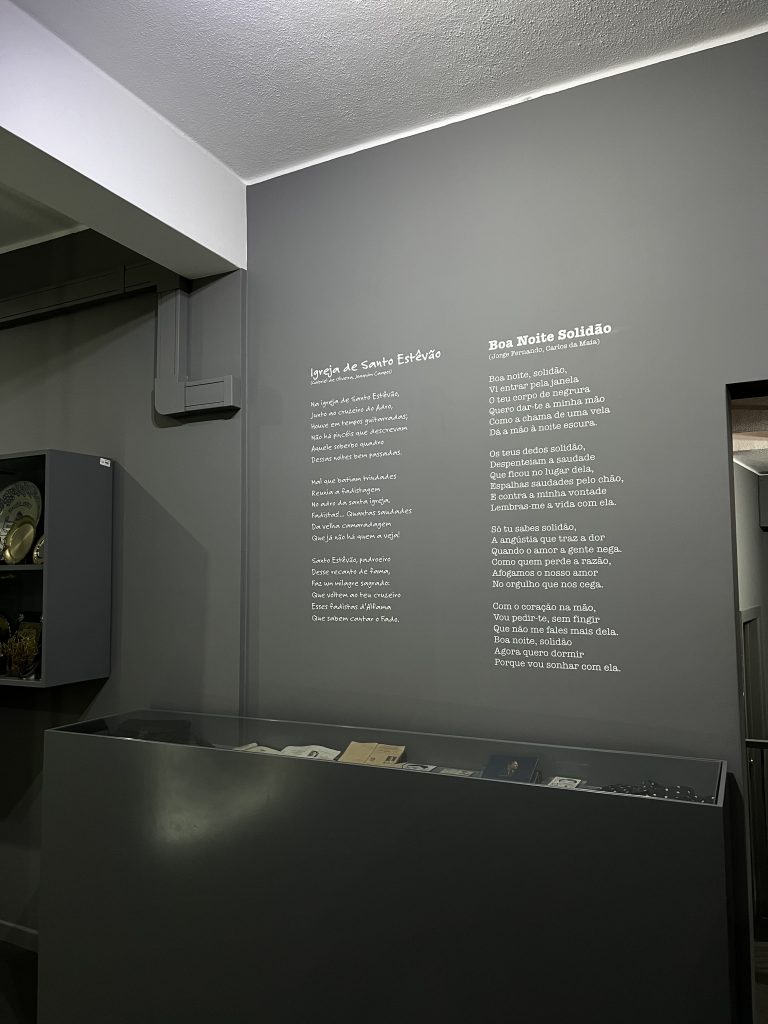
What the Fado magic is all about
It’s the intensity of magic things happening that Pedro Moutinho loves so much about Fado. When he sings, he closes his eyes and stops the thoughts in his head. He is much more singing for himself than for others. In Fado he wants to convey truth. The best Fado concert experience for him is when he can feel that the audience is not just physically, but also emotionally with him. Even though they might not understand the lyrics, he can feel the difference between an emotionally absent or a present audience.
“In the Fado houses there is presented true and traditional Fado. Concerts on stage afford more innovational elements, a more modern melody in the songs. The special thing about stage concerts is, as Pedro describes, that the audience is only there for him. It is also more adrenaline connected to it; whereas the atmosphere in a Fado house is more intimate.”
Pedro Moutinho
As a fadista in a Fado house you usually don’t know before the night which musicians you will work with. Pedro Moutinho describes how this determines the spontaneity of a Fado night. He chooses one song after the other, without planning out the whole night in advance. Depending on the musicians that are there, he would choose what he thinks they can do best.
“It’s very spontaneous. Then I see, okay this guy, he used to play that song for me. So, I can do this one with him again. When I don’t know the musicians to much I have to go more traditional, that I know that they play to other people, too. I tell them the tune I need and they will have to play it for me.”
Pedro Moutinho
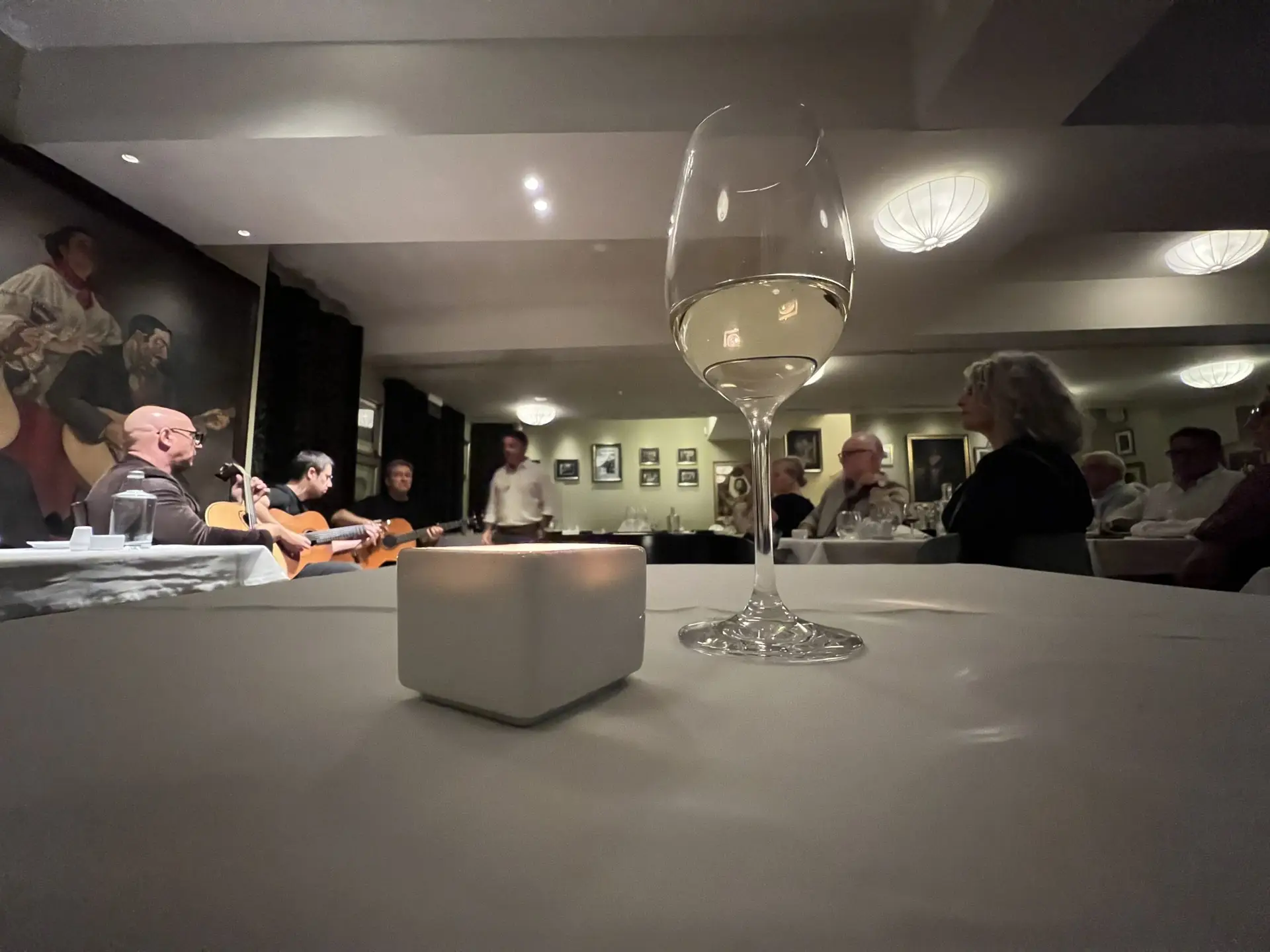
I visit Pedro in the evening after our walking tour at the restaurant Adega Machado, located in the Bairro Alto of Lisbon, where he sings up to 5 times a week. At dinner time the restaurant is usually fully booked, so Pedro recommended me to come after that round for a glass of wine. I arrive around 22h in the evening, when dinner time is about to end. Pedro Moutinho is outside the restaurant, giving his voice a rest. On a Fado night they are usually 2-3 singers playing in alternating sets.
Pedro Moutinho holds a special place in the Fado world
When I enter through the main door I get into a cozy welcoming room, from where I can look through a narrow window into the main area of the restaurant: Sara Paixão is passionately expressing herself, through the walls I can only hear a glimpse of her beautiful voice. During the set it’s not allowed to go into the restaurant as it may cause disturbings. I use my waiting time chatting with Pedro and – looking through the guestbook I discovered. It combines souls and energies from places around the world.
Adega Machado is one of the Fado restaurants where you feel the beats from the past vibrating into the present. Every Fado night is a unique harmony of energies – the audience determines the musician’s mood and the musicians move the restaurant guests with their intuitively chosen Fados.
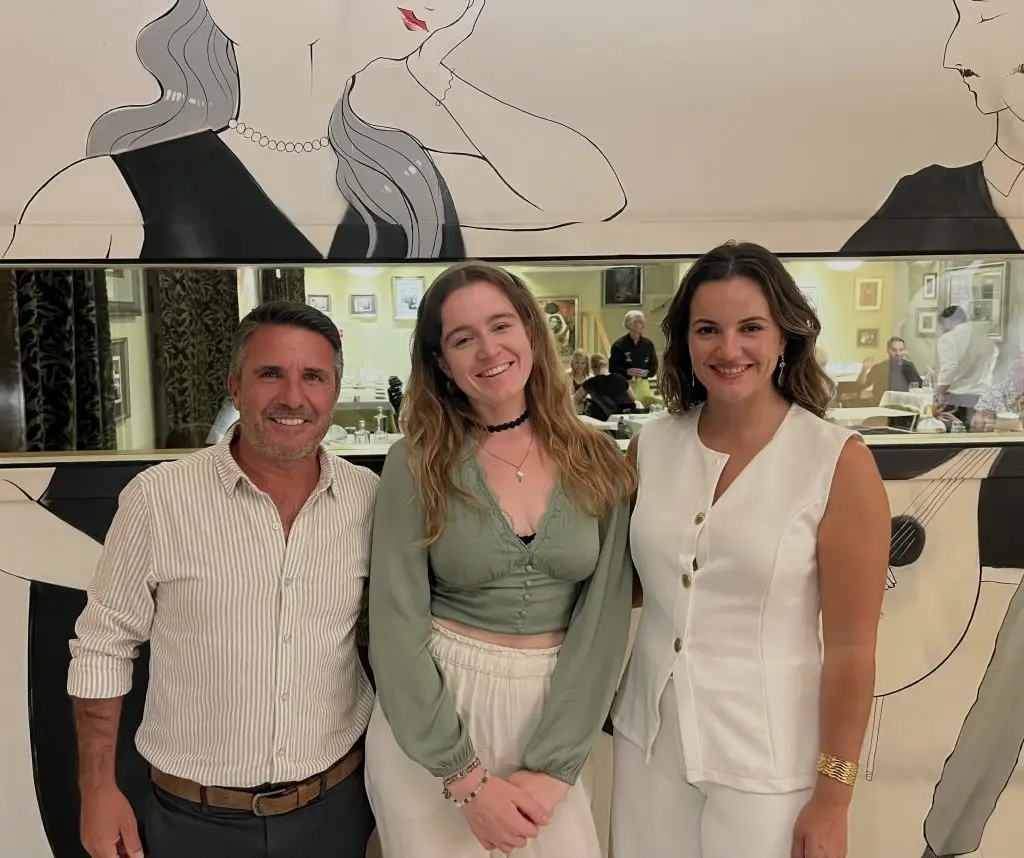
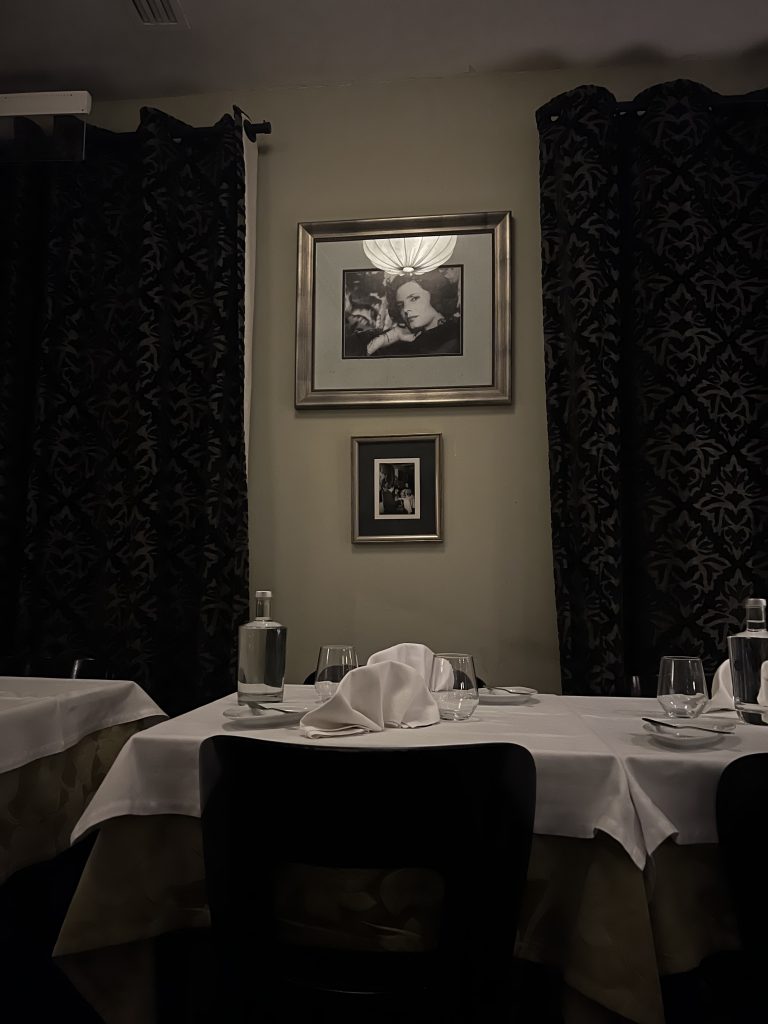
A little later when the restaurant has gotten emptier, Pedro plays another set in an intimate atmosphere. On that night, he said, he got the energy to sing with that much emotion only through Sara’s and my presence.
However, sometimes he also has to deal with unpleasant guests…
“Yesterday I stopped singing because someone was standing up and walking in the middle to take pictures – I told him, please sit down”
Pedro Moutinho
Home is where the Fado house is
Pedro Moutinho was born into a Fado family. His grand-grandfather Gusippe Julio was already a famous singer. “I was born a fadista, but I grow up learning how to sing”. He feels the Fado in his veins and is convinced that a fadista doesn’t need voice, but soul to be a real good one. He remembers how his parents would take him to Fado nights as a child and how he would sleep on the chair until 2 in the morning. With his family he always listened to Fado on vinyl. He himself started his first serious compositions around the age of 15 – “the time when you begin to love and to feel life more intense”.
What’s also essential for a good Fado concert are good musicians, and good sound systems. Nowadays Pedro recognizes more and more artists who start to perform as a Fado artist without knowing and acknowledging the tradition behind it.
“It is the same with jazz. There is real good jazz. And then there are people pretending to play jazz.”
Pedro Moutinho
However, he acknowledges that it is normal to see developments in a music style. There is also a movement among authentic traditional fadistas of embracing songs that aren’t considered a Fado. When Pedro does that, he would always announce it to the audience. The difference is in the melody: In Fado songs, there is only the A line of the melody. In other songs, there is also the B line, “a catchy melody” the so-called bridge between the refrain and the verse, that will be remembered by the listener, “Fado songs don’t have this B-line”. And still, they are remembered in our minds and souls.
- Quotes from my conversations with Pedro Moutinho in October 2025 in Lisbon ↩︎
Leave a Reply