
Chapter 9: Close to the Fado roots
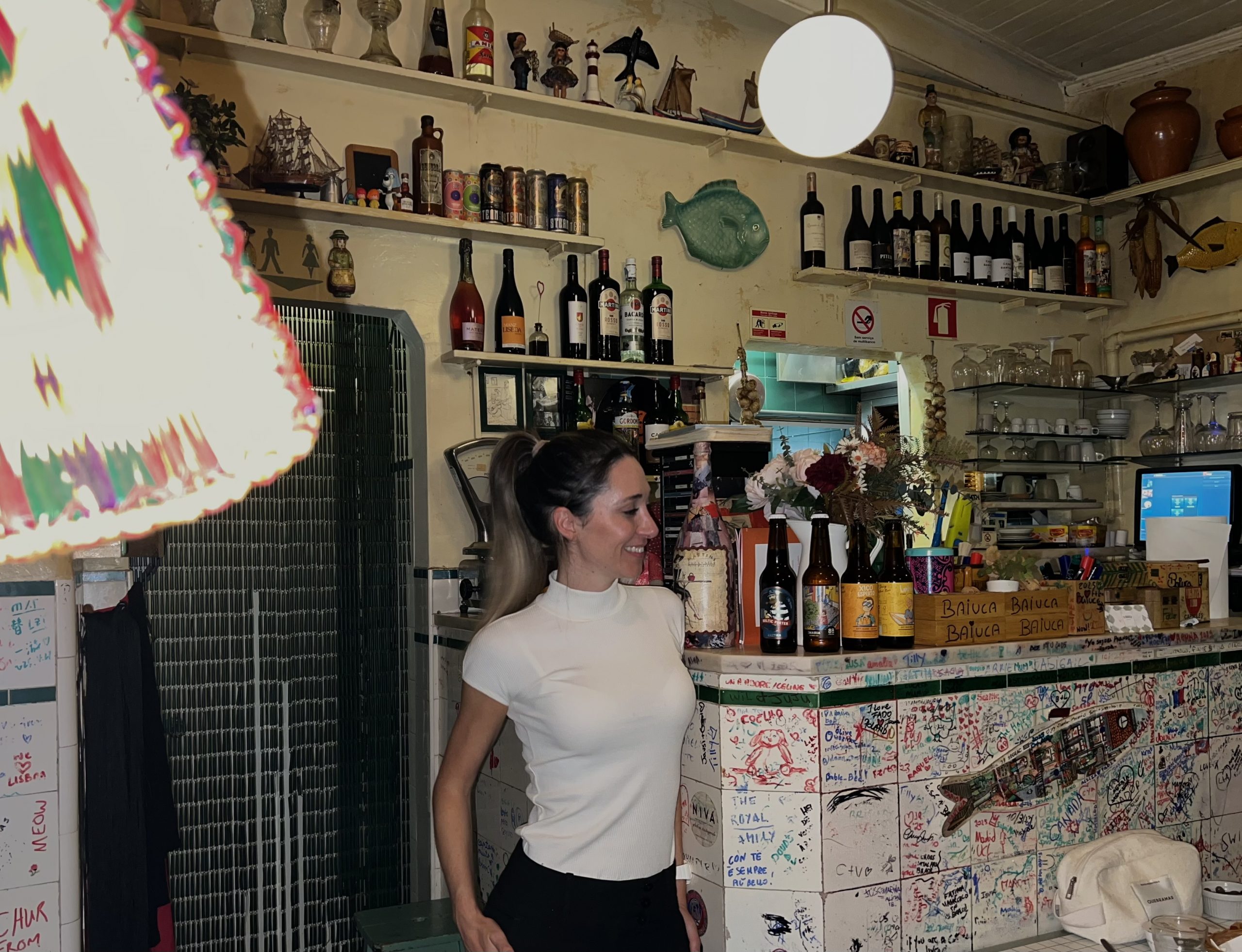
On the first step into A Baiuca, the restaurant gives the vibe of an authentic and relaxed gathering space. Restaurant owner Clara Sevivas shares her warm energy with the people in the room, making it a place to feel comfortable and appreciated. She believes that “the place is very special for itself, even without me”. The musicians and the people that come there make every Fado night at A Baiuca a memory for the hearts.
A Baiuca seems not so touristy like other Fado houses – there are also a lot of Portuguese people coming, as Clara explains to me. She also has regulars from all over the world. And this is just one of many aspects that proofs.
“They show a lot of interest in the Fado, some even started learning Portuguese to understand the lyrics.”
Clara Sevivas
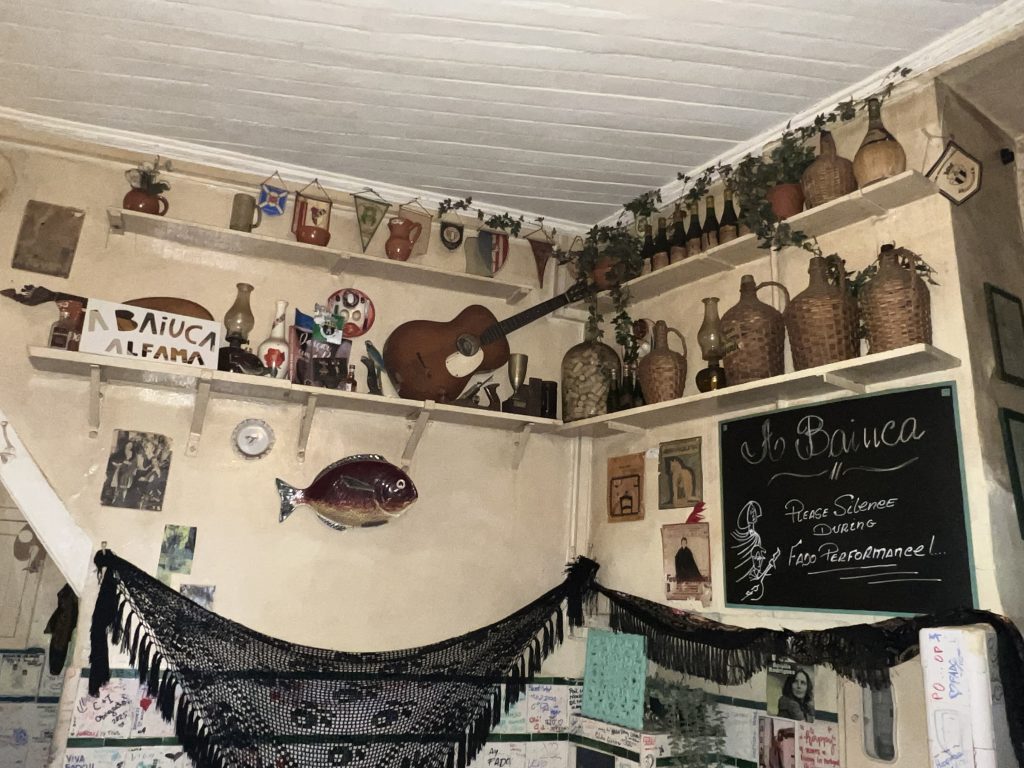
Authentic reviews decorate the walls at A Baiuca
The walls of the restaurant room are full of scratches and comments in different colors. Clara explains the origins of this “idea”. After she bought the place, they started to draw grids on the walls, noting down the results of their card plays. “One day we forgot to erase it. And then someone else wrote something.” And these doodles animated guests to write more and more notes on the walls. Today one can read hundreds of messages on the walls, capturing people’s emotions and thoughts during the Fado nights at A Baiuca in the past years. A place that unites souls.
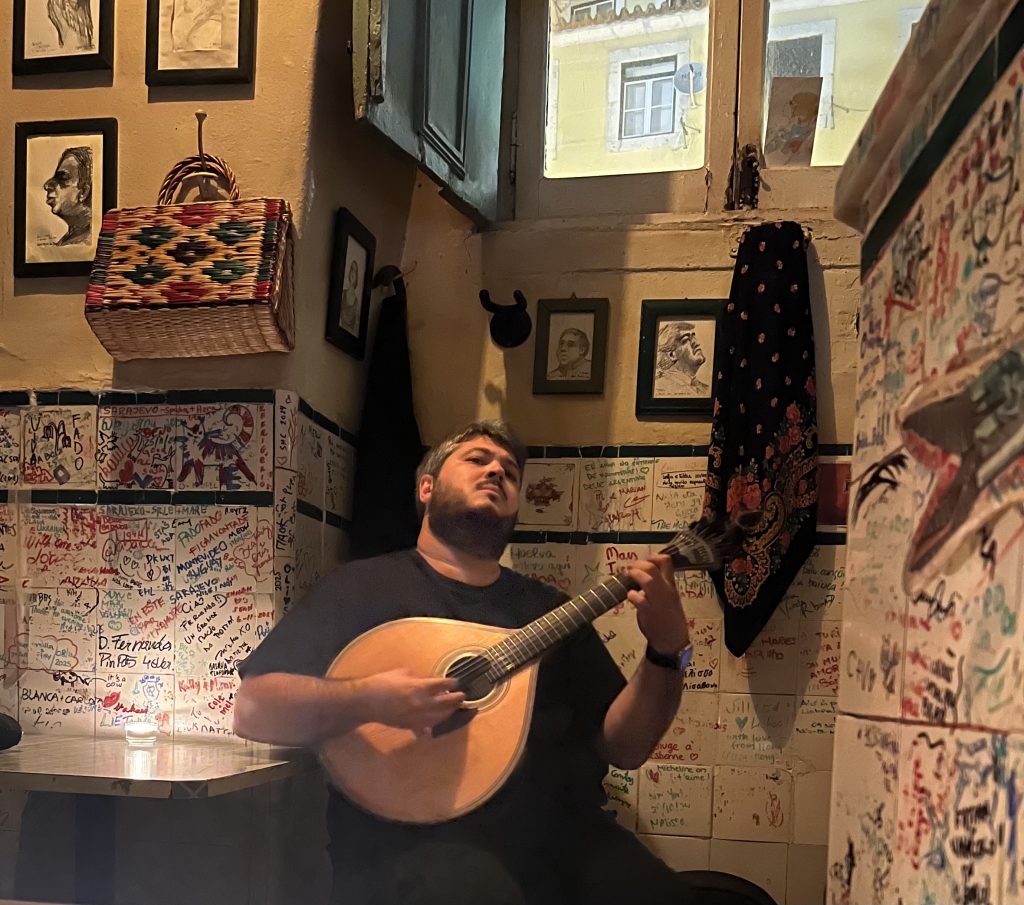
On Tuesdays and Wednesdays, guests come here to listen to one of the top Portuguese guitar players Ângelo Freire. Growing up in Graça, the area right next to Alfama, Ângelo has always been in touch with fado. As a child he went to the Fado houses in Alfama. At the age of 7, he started learning to play the guitar by himself. He played Fados, and he also found the potential in his voice. In his youth he took vocal coach lessons, and for 8 years he studied guitar. In the past years he accompanied great Fado singers on stage such as Mariza or Ana Moura.
Life at the Fado house as an authentic foundation
Currently, Ângelo plays the Portuguese guitar on stage with singer Sara Correia. And still, it’s important for him to keep playing in the Fado houses, where Fado is born and kept alive in the most authentic way. Ângelo is closely connected with the people in the neighbourhood around A Baiuca, the Fado house where he plays on Tuesday and Wednesday nights. It’s like his emotional foundation for everything else he does. He would never want to stop playing at the Fado houses.
Sometimes it’s difficult to find subs for the days when he has other shows to attend. Because on the big stages they need the best musicians, such as Angelo. He is planning a guitar project with Jose Manuel Neto and Luis Guerreiro, touring together through Europe. “They are my inspiration”, says Ângelo about musicians older than him. He looks up to them. I can feel that during his performance at A Baiuca, where he plays together with a female elderly woman and an acoustic guitar player from the older generation.
“The audience will usually notice how I feel on that day from my choice of songs. On some days I’m in a positive mindset and on others in a darker mood.”
Ângelo Freire
When he enters the restaurant, I feel that he is rather in a stressed mood and that his head was circling in many directions. Later he confirms my first impression as right. That doesn’t stop him from performing great as he used to do.
In the first set, Ângelo “only” plays the Portuguese guitar, accompanying his “Fado grandmother”, as he says, Fernanda. She has a powerful voice. Restaurant owner Clara stands behind the bar, surveilling the room. When someone starts to make noise, she points with her finger on her mouth: “shhhh”. I like that. She seems to have an authentic connection with the traditional way Fado is performed.
And suddenly, Clara starts singing herself, creating a wonderfully harmonious duet with Fernanda. It’s incredibly beautiful how her young voice interacts with Fernanda’s voluminous one.
Ângelo Freire
Is it a problem for you when guests in Fado houses film you?
“It’s okay if they want to have it as a memory. But I’m sure that most of them don’t look at the videos again after that evening.”
What do you think about early evening Fado shows?
“The fadistas that sing there don’t grow from their performance.”
Do you also play your own songs in the Fado houses?
“Sometimes, but usually not. To be honest I don’t remember all lyrics of my own songs.” (*laughs*)
The traditional Fado lyrics are in his mind – the melodies on the Portuguese guitar and the chords on the acoustic guitar. But the lyrics of the own songs not… a musicians’s mystery.
In the Fado houses one will see, that Fado is about more than just singing or playing some guitar strings. There is the vivid energy in the restaurant, the connection between the listeners’ souls.
Leave a Reply